Three Kingdoms Weapons Ranking — The Tools That Changed the Battlefield
From Romance of the Three Kingdoms and the official history Records of the Three Kingdoms
The battles of the Three Kingdoms are often told in terms of the strength of men. This time, however, we will look only at the weapons. Men, and the weapons held in the hand, are excluded. Battles of fire are also excluded. The measure is one thing only: how much can be destroyed in a single blow. Machines made to destroy were sometimes destroyed themselves.
And the thing that destroyed the most was something that did not have the shape of a weapon. Counting from the weakest, that reversal comes into view. We will count from fourth place.
Read the Comic
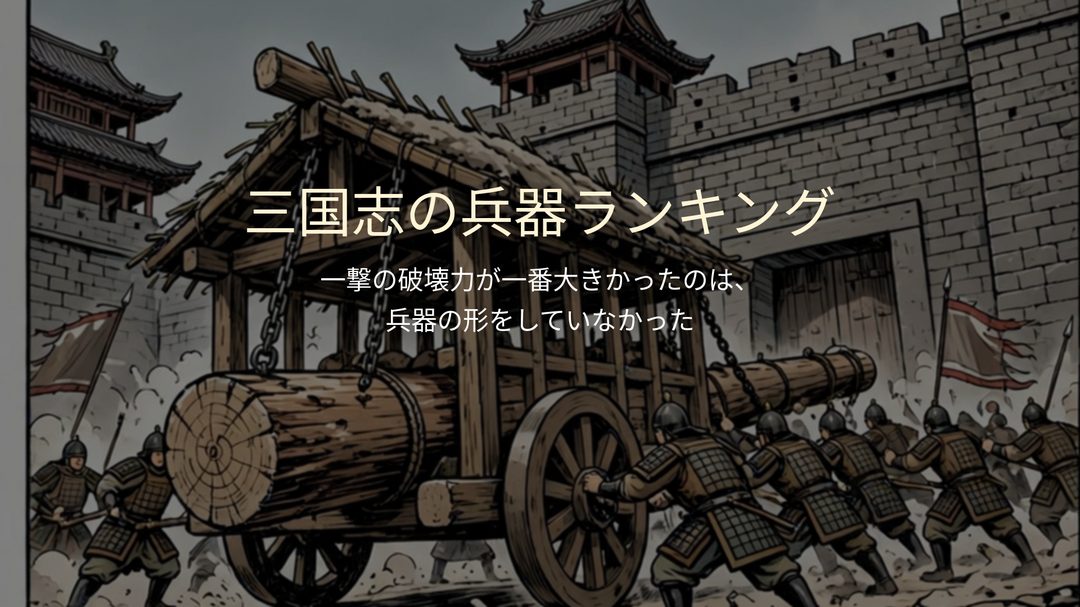
4th Place: The Battering Ram — Destroyed Before It Could Destroy
3rd Place: The Massed Crossbow Volley — Mechanical Precision Brought Down a Famed General
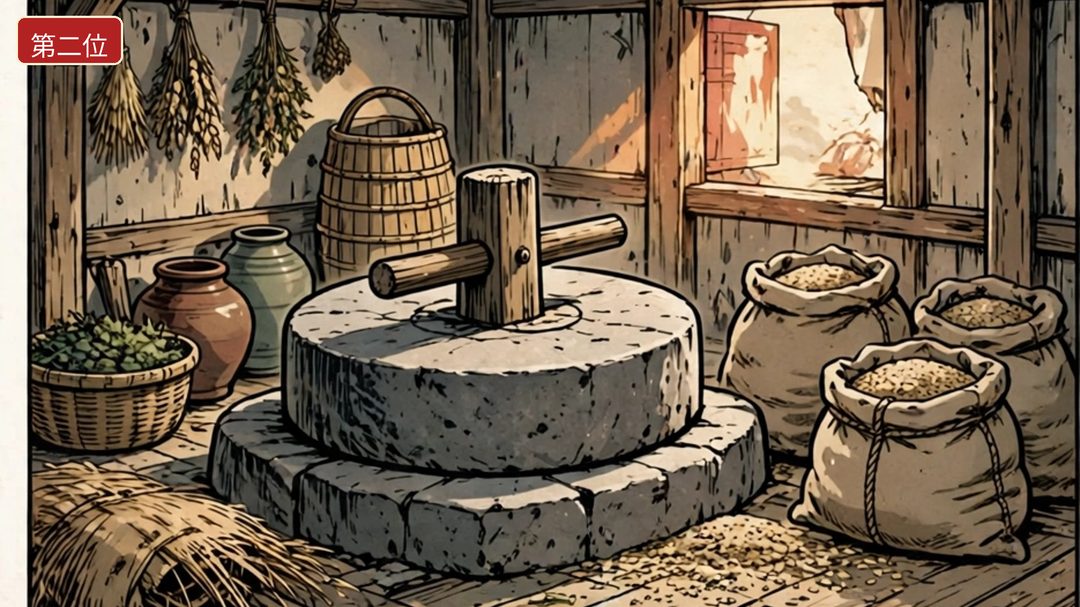
2nd Place: The Defenders' Millstones — The Dropped Stone Destroyed the Most
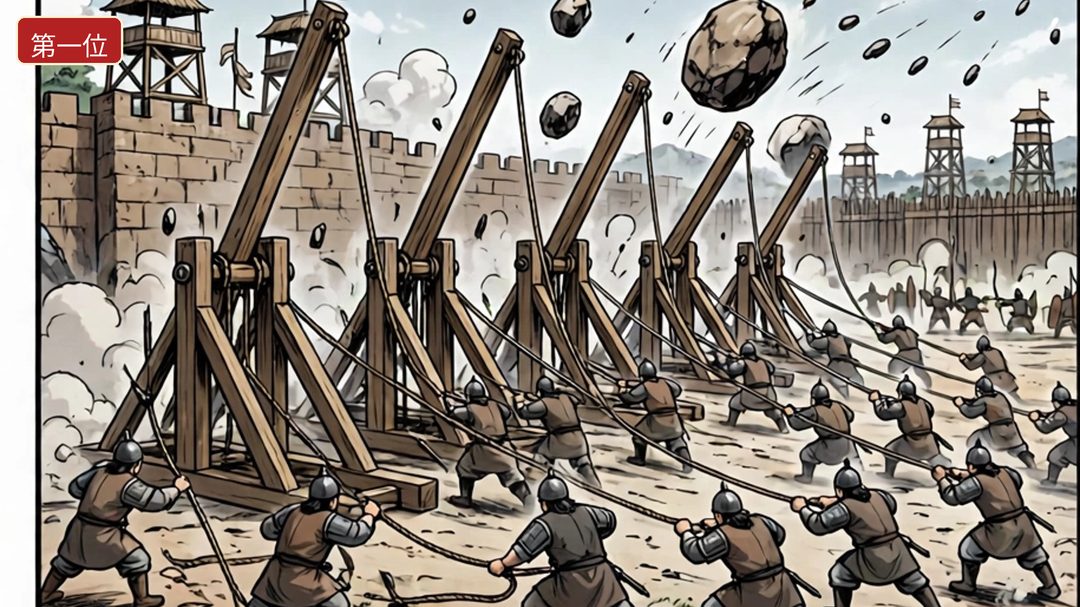
1st Place: The Stone-Throwing Cart — The Peak, Called the Thunderclap Cart
Read the Text
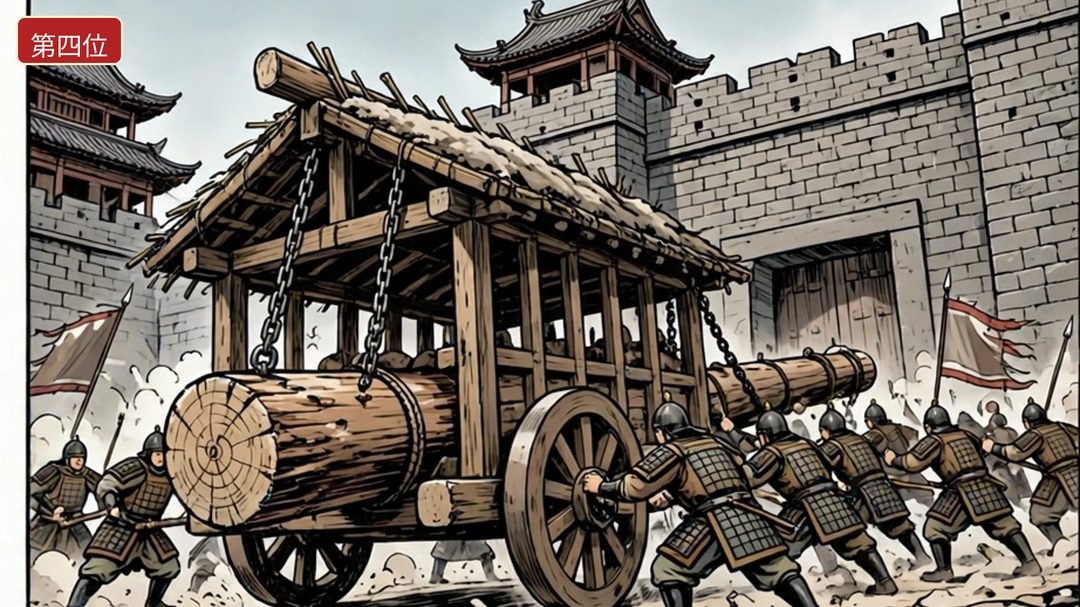
4th Place: The Battering Ram — Destroyed Before It Could Destroy
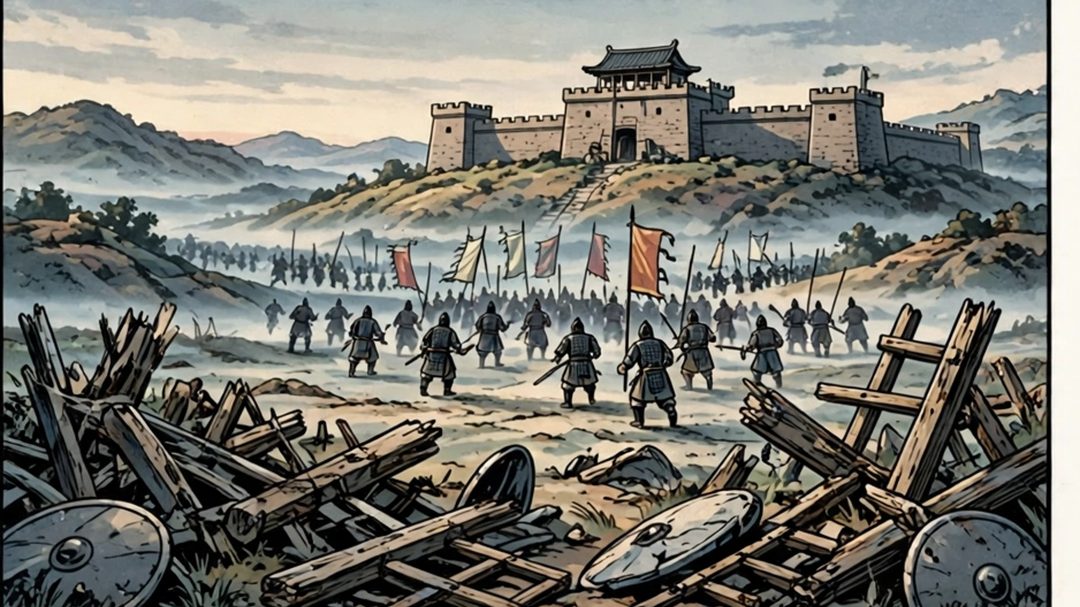
In fourth place is the battering ram. It is a siege machine that hangs a great log and strikes it against a city gate to break it open. By rights, it was a weapon that should have stood near the top. Yet in its representative scene left in the records, this machine was destroyed. The setting is Chencang. The attacking army of Zhuge Liang numbered in the tens of thousands.
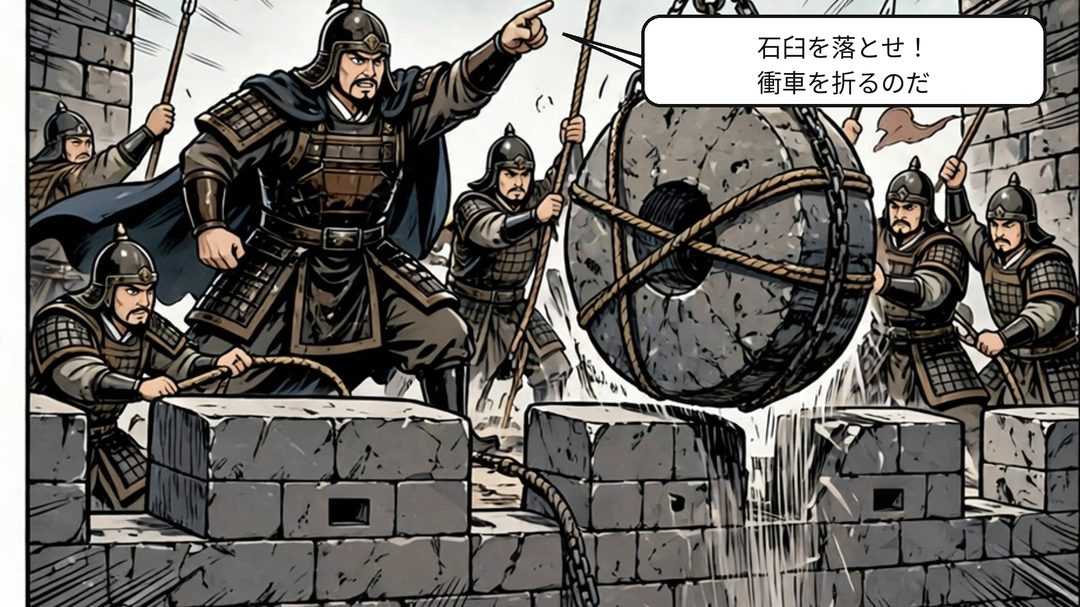
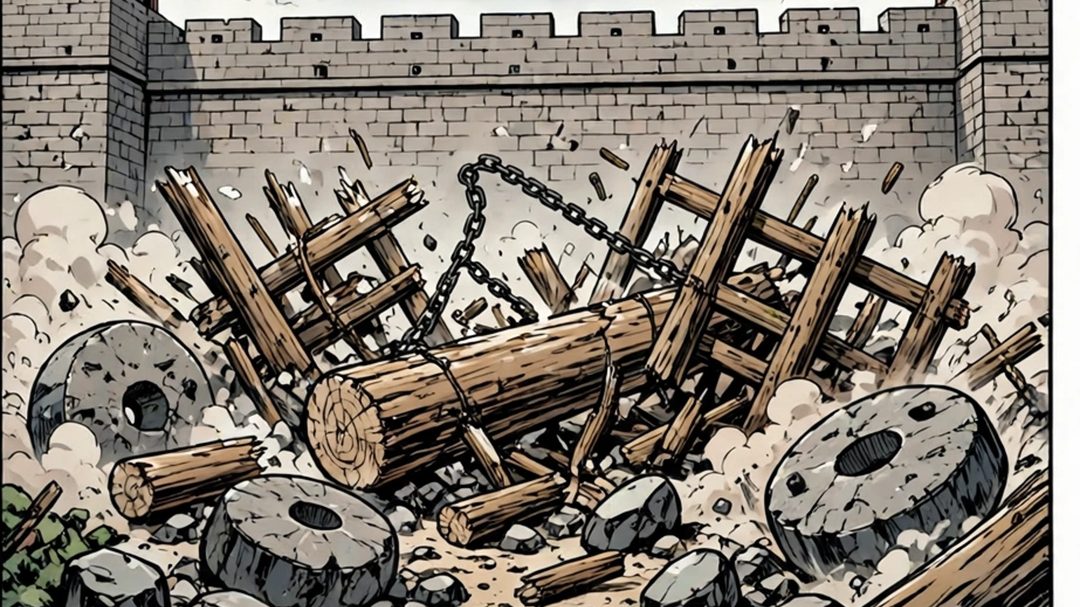
The soldiers of Hao Zhao who defended numbered only a little over a thousand. In the Romance, Chapter 97 and Chapter 98, Kongming puts out one siege method after another. The scaling ladders are burned with fire arrows, and the battering rams come out. Hao Zhao bored holes in stones, threaded ropes through them, and hurled them from the city walls to strike. The battering rams were all smashed to pieces, the Romance writes.
Though the sources differ, the old records tell the same ending. The record of it being destroyed became more famous than the record of it destroying. The reason its rank is low is not that the battering ram was weak. It is that its opponent was a master of defense, who stopped tens of thousands with a little over a thousand. The strength of a weapon is not decided by the form in which it was made.
It is decided by the scene in which it was used, and by the opponent it faced.
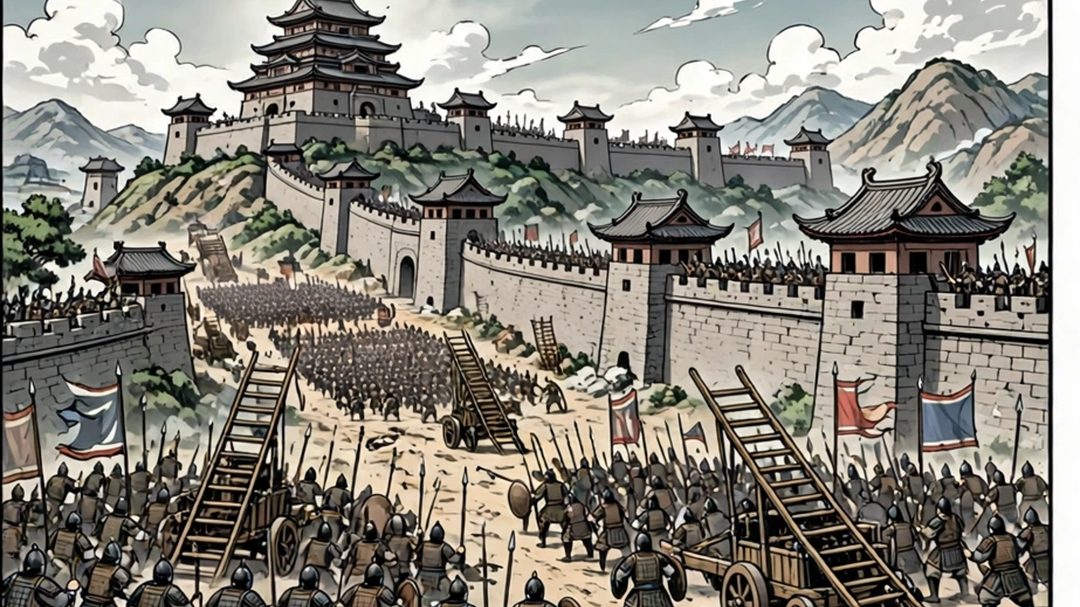
3rd Place: The Massed Crossbow Volley — Mechanical Precision Brought Down a Famed General
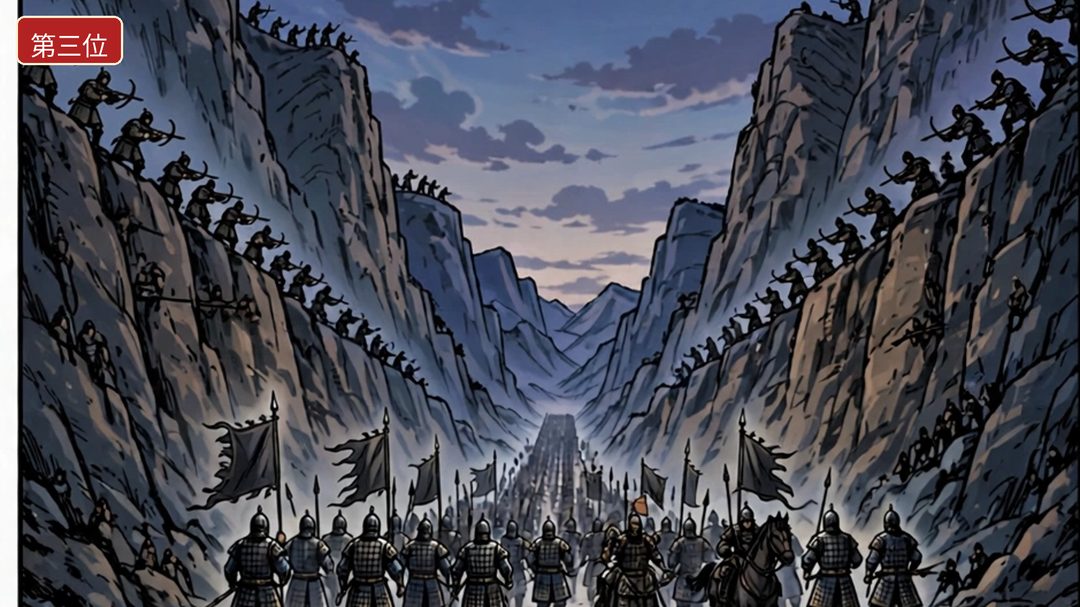
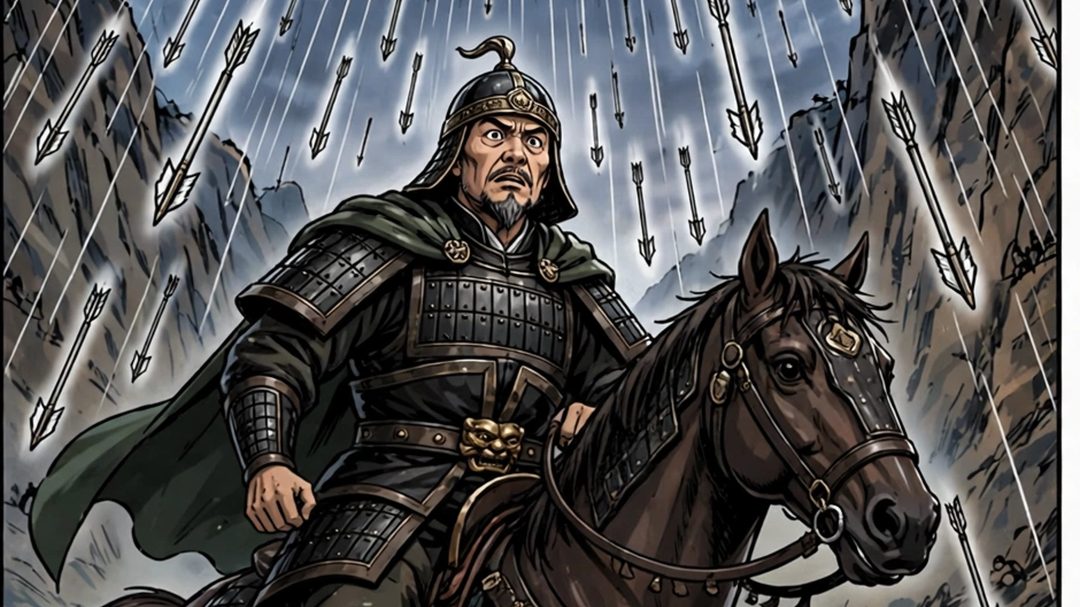
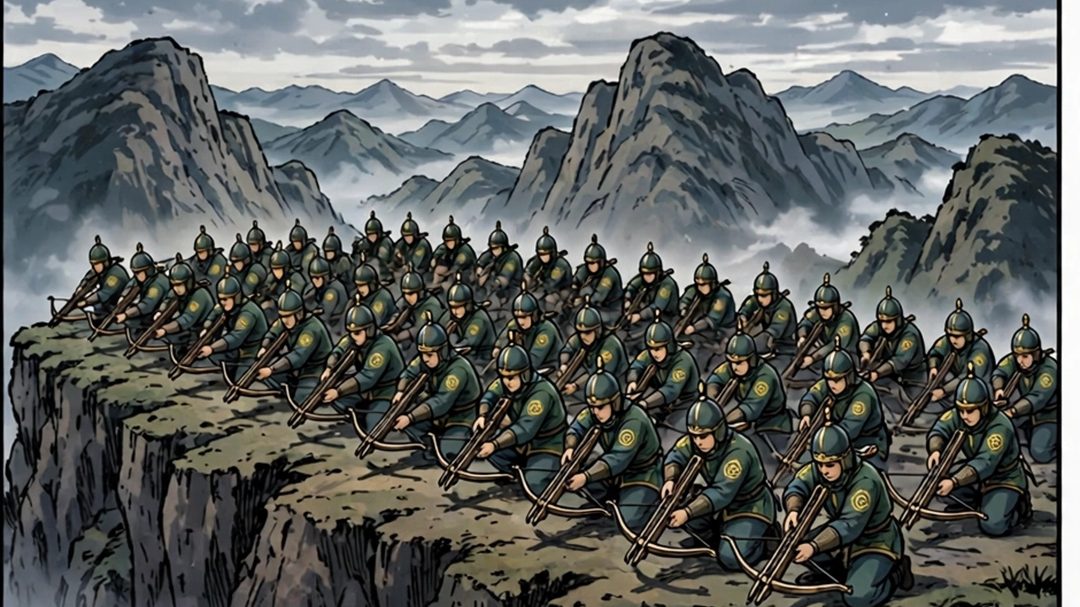
In third place is the massed volley of crossbows. The final moments of Wei's famed general Zhang He are the proof. The Biography of Zhang He in the official history writes briefly: pursuing, he reached Mumeng; a flying arrow struck his right knee, and he died. The Weilüe quoted in Pei Songzhi's annotations is a little more detailed: the Shu army lay in ambush on the heights and loosed bows and crossbows in disorder, and an arrow struck his thigh.
Chapter 101 of the Romance depicted this disordered loosing on a grand scale. From the cliffs on both sides, ten thousand crossbows were loosed at once, and Zhang He and a little over a hundred of his officers were shot dead. The numbers are embellished. But the core lies in the old records. The crossbow itself is also left in the records. The main text of the Biography of Zhuge Liang writes that he was skilled in clever devices, and that both the repeating crossbow and the wooden ox and flowing horse came from his ideas.
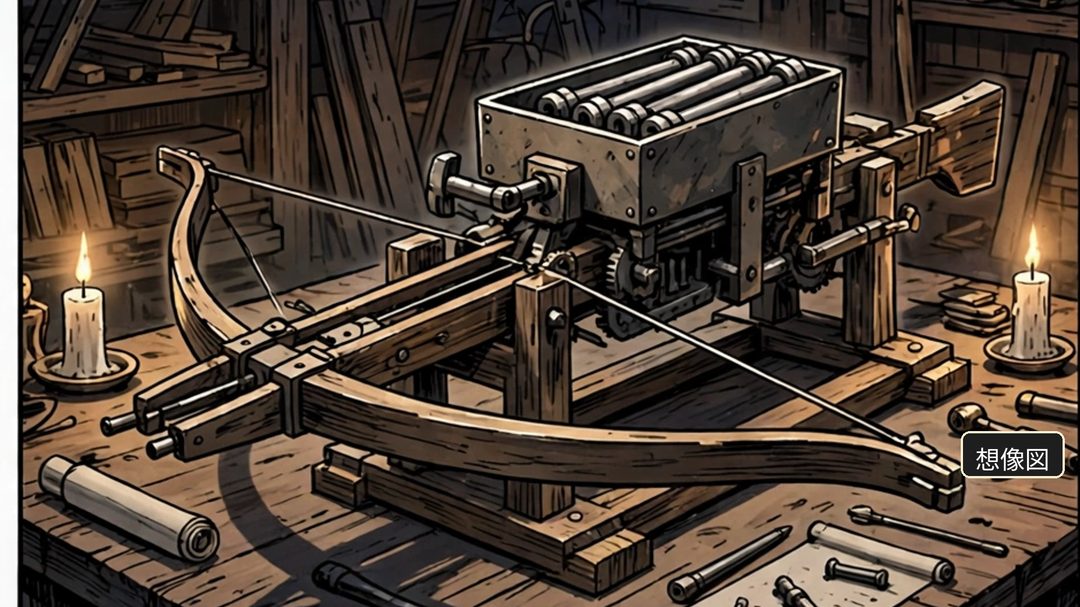
The Weishi Chunqiu quoted in the annotations preserves the specification of the improved repeating crossbow. It was named Yuanrong. It used iron arrows, the arrows were eight cun long, and a single crossbow loosed ten arrows at once, it says. This is a reconstruction drawing. No actual Yuanrong survives, and its form has not been restored. The strength of the crossbow is not the size of a single blow.
It is the precision to aim at a famed general and reliably bring him down, and the mechanism of loosing them all at once. It was a weapon that realized the destruction of an area by the power of a machine, not by a man's arm.
2nd Place: The Defenders' Millstones — The Dropped Stone Destroyed the Most
In second place are the defenders' millstones. The setting is Chencang again. Hao Zhao with a little over a thousand, and Zhuge Liang with tens of thousands. The Weilüe quoted in Pei Songzhi's annotations relates this offense and defense in detail. Liang, relying on his superior numbers, attacked Hao Zhao, it begins. When scaling ladders and battering rams were brought against the city, Hao Zhao shot the scaling ladders with fire arrows.
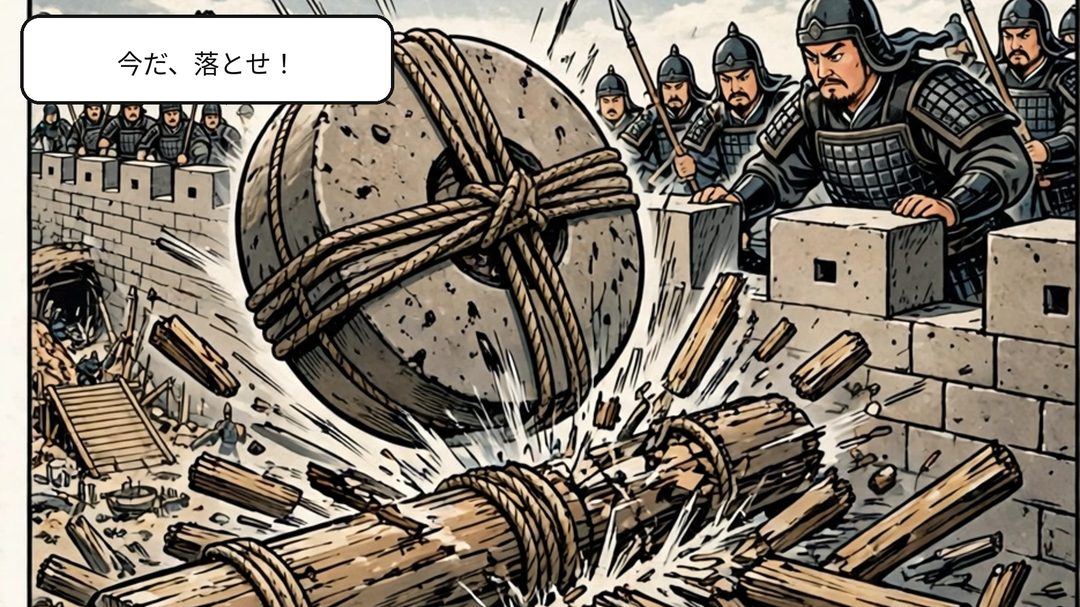
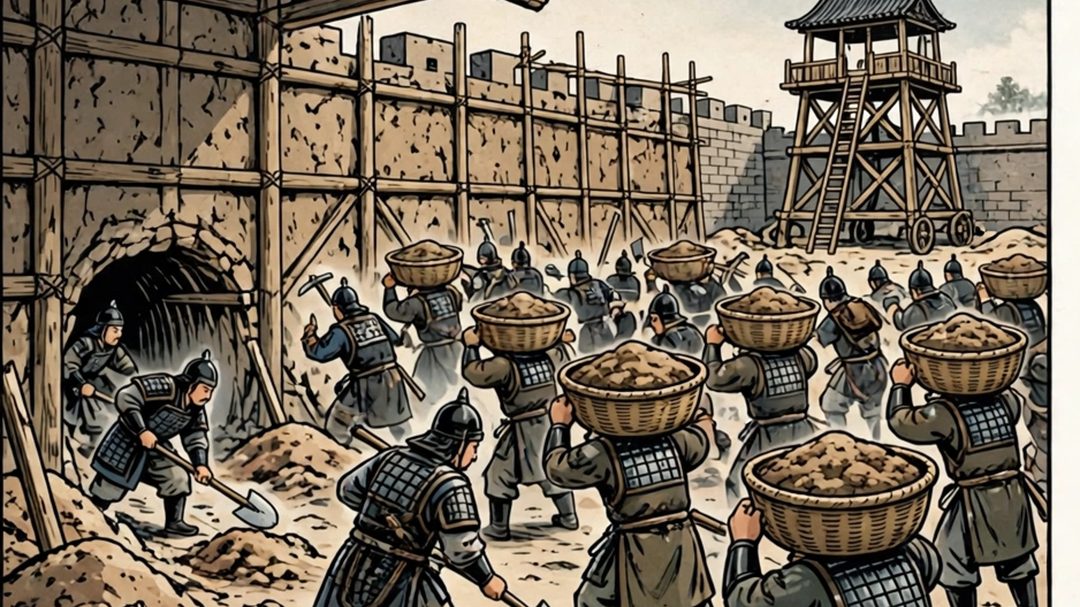
And he dropped millstones linked by ropes onto the battering rams, and the battering rams broke, it says. Millstones. They were tools of the kitchen and the farmhouse, for grinding grain. Liang further built siege towers a hundred chi high and had them shoot into the city. When the attackers filled the moat and tried to climb directly, layered walls appeared inside the city. When they dug tunnels to come out behind the city, the tunnels were cut by cross-passages dug from within.
Attacking and defending, day and night, for a little over twenty days. Liang ran out of stratagems, reinforcements arrived, and he withdrew, the Weilüe concludes. The single blow of a millstone was no ornament. It stopped every siege method and drove back an army of tens of thousands. In stories, destruction is done showily by showy machines.
But the showiest destruction in the old records was a stone that the defending side rigged up and dropped on the spot.
1st Place: The Stone-Throwing Cart — The Peak, Called the Thunderclap Cart
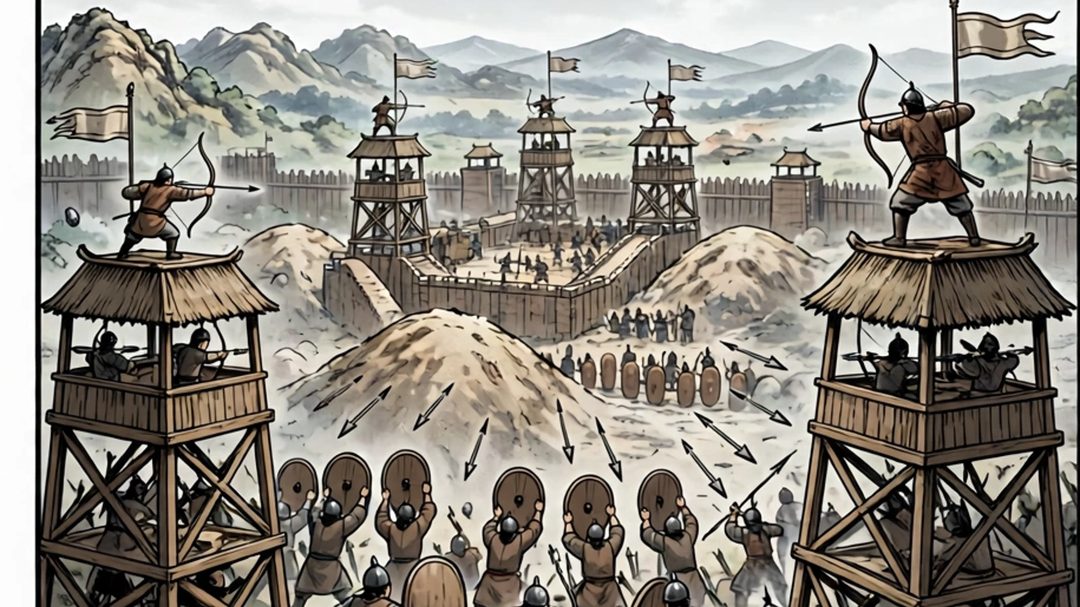
In first place is the stone-throwing cart (the traction trebuchet). The Battle of Guandu was a war of positions. Yuan Shao built tall towers and raised earthen mounds, and had his men shoot into the camp. In the words of the Biography of Yuan Shao in the official history, everyone in the camp lived with a shield held overhead. It also writes that everyone was greatly afraid. A side shot at from above without pause cannot even live normally.
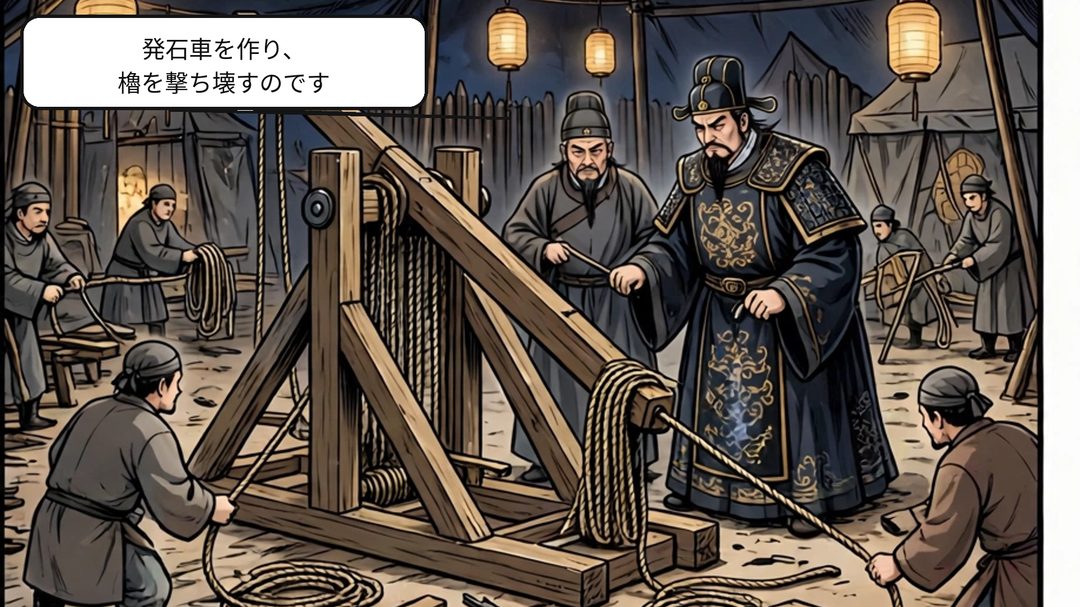
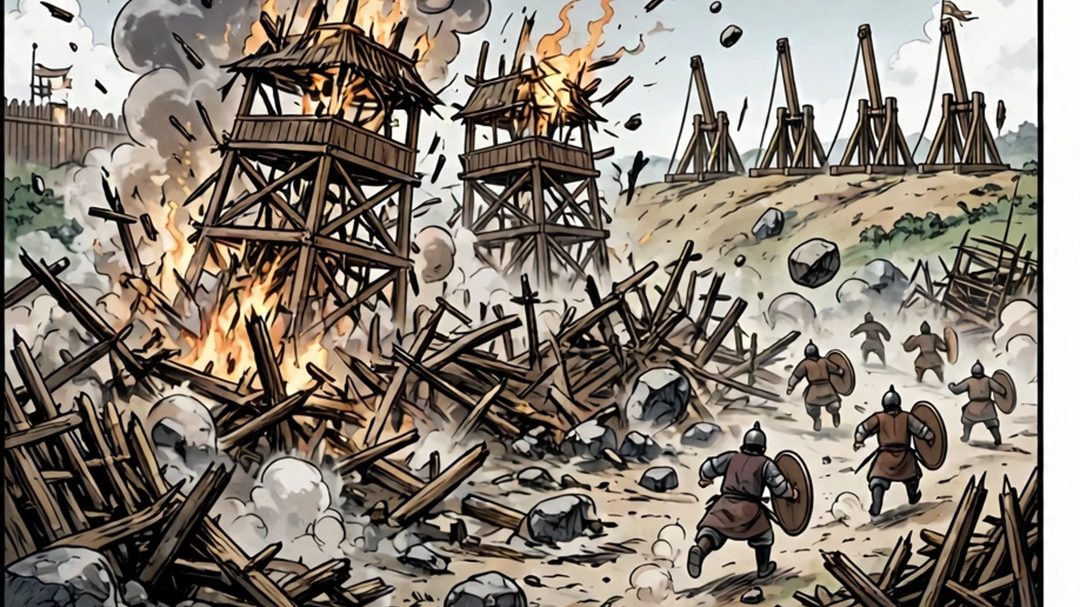
What broke this was the stone-throwing cart. The Biography of Yuan Shao continues: Cao Cao made stone-throwing carts, struck Yuan Shao's towers with them, and destroyed them all. In the Romance, Chapter 30, the one who proposed it was Liu Ye. Several hundred were made in a single night, lined up inside the camp walls, and set facing the towers on the earthen mounds. Waiting for the archers to shoot, they pulled the ropes all at once and set them in motion, and the stones flew through the sky and rained upward in disorder, it says.
There was nowhere to flee, and the dead among the archers were beyond counting, it also writes. The stone-throwing cart is a traction trebuchet, in which many people pull the ropes. Neither the weight of the stones nor the distance they flew is written in the records. The size of its destructive power is shown not by numbers, but only by the result.
And the name remained. Yuan Shao's army called this cart the pili che (Thunderclap Cart). Pili means thunder. The ones who named it were not Cao Cao's army, which made it. They were Yuan Shao's soldiers, the side that was destroyed by it. The strength of a weapon remained in the words of the side that feared it.
- h2 Liu Ye: "Make stone-throwing carts, and smash the towers." — Chapter 30 of the Romance, Liu Ye's proposal (to make stone-throwing carts and break the towers).
Conclusion — The Strongest Weapon Did Not Have the Shape of a Weapon
Lined up again, the conclusion is clear. The thing that did the largest destruction in the Three Kingdoms was not a machine made for attacking. It was a millstone, dropped to defend. The stone-throwing carts destroyed positions, the crossbows brought down a famed general by mechanism, and the battering rams ended up on the side that was destroyed.
Stories write destruction showily, and old records write only the result, briefly. But a single line of record — the towers all destroyed, the battering rams broken — is heavier than showy description. Neither numbers nor weights are written, and yet the size of what was destroyed comes through.
Sources and Basis
Source material
As an exception, the Romance and the official history are used together, and the sources are distinguished within the text. For the Romance, Chapter 30, Chapter 97, Chapter 98, and Chapter 101 were checked; for the official history, the Biography of Yuan Shao, the Biography of Zhang He, the Biography of Zhuge Liang, and the Weilüe quoted in Pei Songzhi's annotations (the Battle of Chencang), among others.
About the ranking
The ranking is measured by "how much each changed the battlefield and the course of the fighting." For anything whose actual existence cannot be confirmed, it is made explicit that it is a reconstruction drawing.