Kongming at Wuzhang Plains — The Dead Kongming Puts the Living Zhongda to Flight
From Romance of the Three Kingdoms, Chapter 103 and Chapter 104
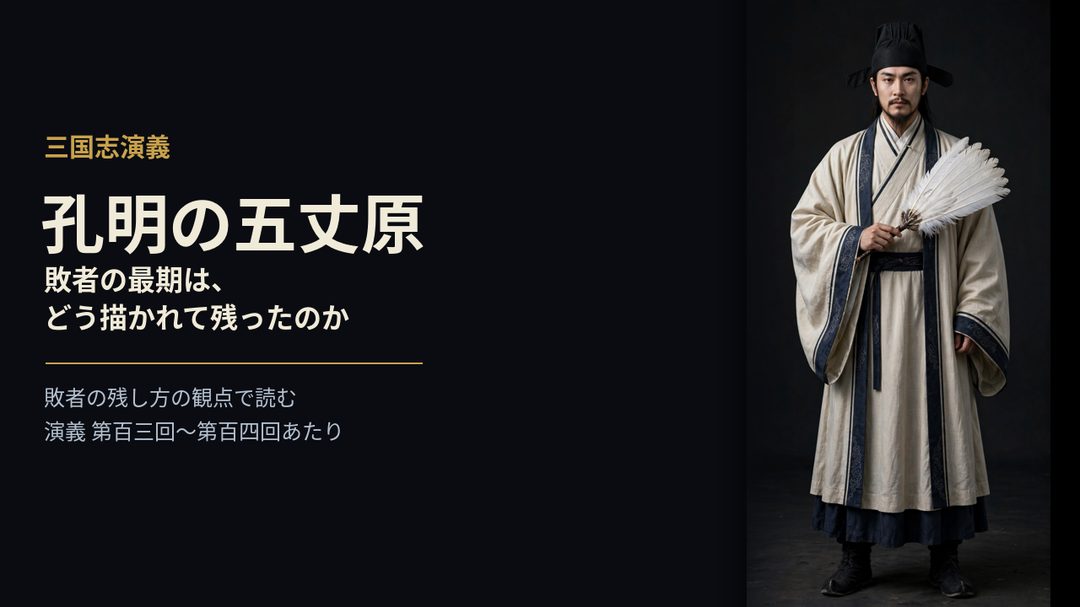
Among the scenes in Romance of the Three Kingdoms, the scene in which Zhuge Liang (Kongming) passes away, at Wuzhang Plains, is portrayed as an especially quiet one. It is not the resolution of a great battle. It is the scene of a master strategist, a central figure, quietly reaching his end inside his camp. Not the triumphal song of the winning side, but the final moments of the side that fell.
That is the theme of this scene. Today we will read not the course of the war, but how it is portrayed. What did the Romance leave behind in the final moments of the losing side? The depiction of the star, the concealed death, the strife after the death, and the figure of Sima Yi, who had lost his opponent. We will read it through these four scenes.
Watch the Video
Read the Comic
The Concealed Death: The Wooden Statue Protected the Retreat
Strife After the Death: Even So, the Retreat Did Not Collapse
Sima Yi's Reaction: The Side That Lost Its Opponent
Read the Text
How the Death Is Portrayed: The Star, and a Quiet Progression
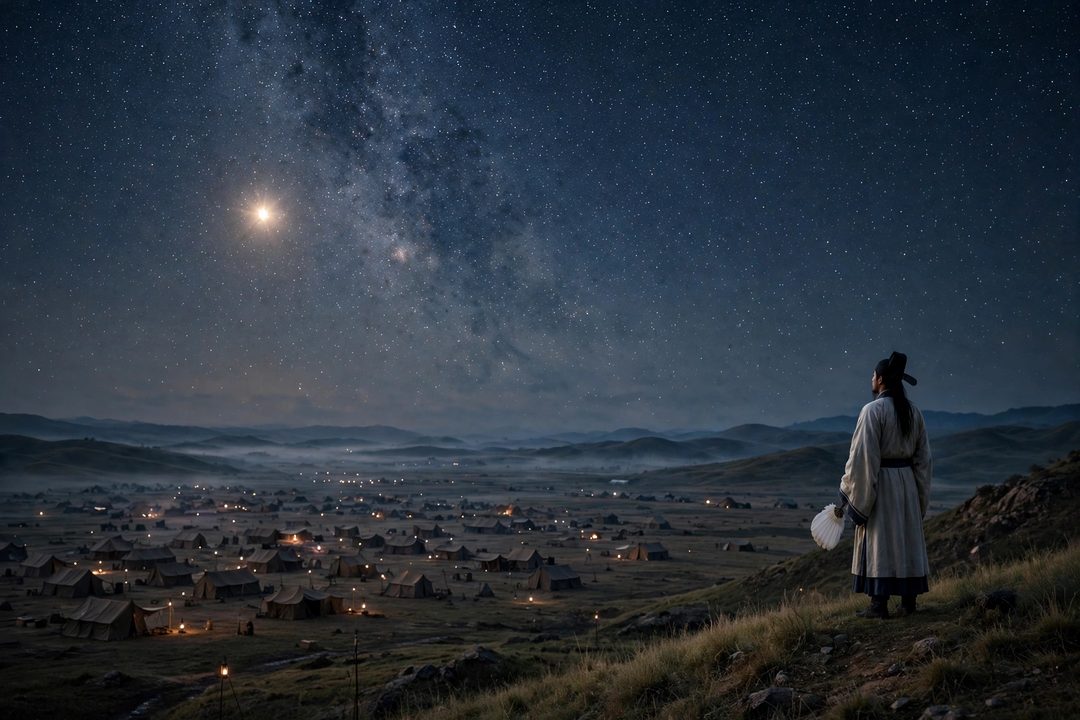
Kongming's death is portrayed not as a dramatic blow, but as a quiet progression. Even as his body failed, Kongming continued his civil and military duties inside the camp, and did not let go of his responsibilities to the very end. Here the Romance depicts an anomaly in the stars in the heavens. The general's star wavers, and its light grows weak. The star is used as the very measure of Kongming's life.
If the star falls, his life will also end. The words of Kongming, facing death, are quiet. They are words accepting fate, not words of lamentation. A ritual praying for the extension of his life is also depicted, but the attempt fails quietly when Wei Yan barges in and the lamp is extinguished. The Romance portrayed death not as an incident, but through the star, the lamp, and the continuation of duty.
It depicts not a clamorous death, but the very process of fading away. That is the first characteristic of this scene.
The Concealed Death: The Wooden Statue Protected the Retreat
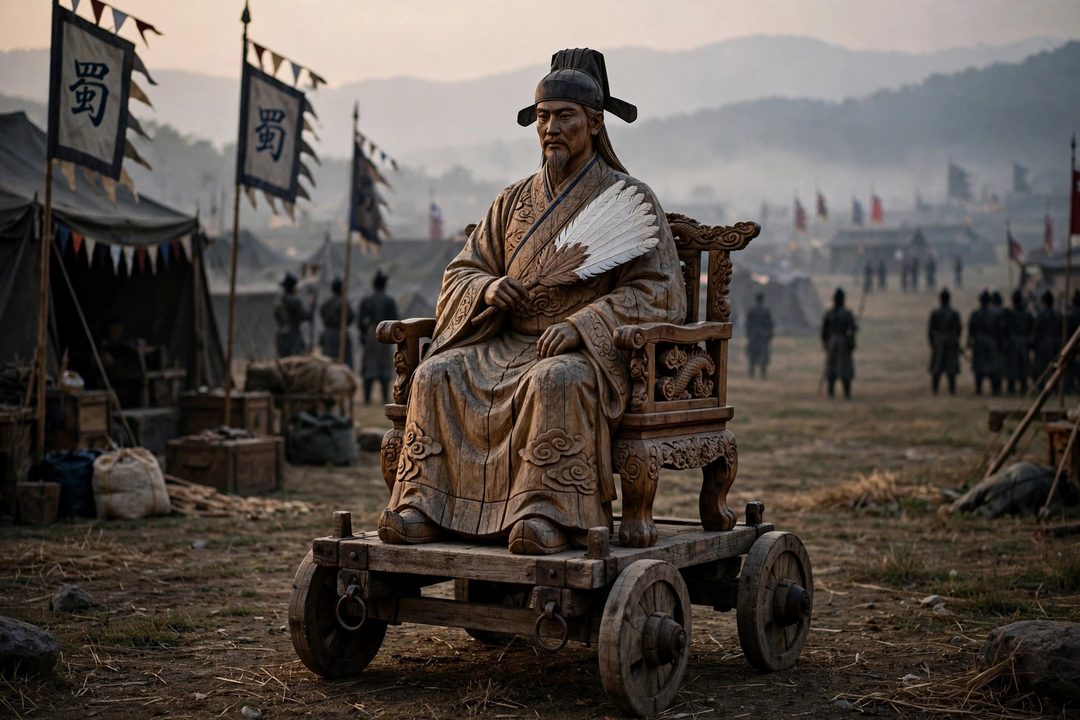
Kongming's death did not come to light right away. The Shu camp strictly concealed the death. More than that, Kongming had left arrangements even for what was to happen after his own death: devices for covering the rear of the retreat, movements made to look like an advance, and a wooden statue modeled on Kongming's own figure. The wooden statue was placed on a carriage and set before the camp, just as Kongming had been in life.
Wei's Sima Yi, seeing that figure, judged that Kongming was still alive, and hesitated to pursue. This is the scene later told as "the dead Kongming puts the living Zhongda to flight." Even after the man was gone, his presence moved the army and stopped the enemy. The Romance extended the final form of Kongming's power to beyond the man's own death.
The death was concealed, and only the presence stood at the fore. The retreat was accomplished on top of this device.
Strife After the Death: Even So, the Retreat Did Not Collapse
Yet inside the camp that concealed the death, strife broke out. Wei Yan and Yang Yi. The long-standing rivalry over who would succeed Kongming erupted at the boundary of his death. Wei Yan burned the roads to obstruct the retreat, and the two competed in appeals to the court. The strife ended with Wei Yan's defeat and death.
The Romance depicted this strife without hiding it. Even so, the retreat of the Shu main force itself did not collapse, because the arrangements Kongming had left in advance outweighed the strife of men. Here lies the core of the Romance's way of portraying things. An organization is thrown into disorder by a person's death. But the arrangements left behind absorb that disorder.
It does not turn the hero's death into an unscathed, beautiful tale. By depicting even the strife, the accomplishment of the retreat gains weight.
Sima Yi's Reaction: The Side That Lost Its Opponent
One more person is depicted impressively in this scene: the opponent, Sima Yi. Sima Yi, who had withdrawn before the wooden statue, later learned the truth — that Kongming had already died. Even while he became the seed of the joke, "the dead Kongming puts the living Zhongda to flight," Sima Yi's reaction is not a mere sense of defeat.
Sima Yi is depicted as viewing the site of Kongming's camp and acknowledging how well-ordered it was. Losing an opponent of many years was, at the same time, surviving him. Sima Yi's war brings one era to a close here. The Romance left a quiet afterglow even on the side that survived. The figure of Sima Yi, standing on a battlefield with no opponent, closes the story of Wuzhang Plains.
Conclusion: What the Romance Left to the Loser
To sum up how Wuzhang Plains is portrayed, the Romance left four things in the final moments of the defeated side. First, that it depicted death, not as a clamorous incident, but through the star, the lamp, and duty. Second, that by concealing the death and putting the presence at the fore, it depicted the retreat in defeat as an accomplished operation.
Third, that it depicted the strife after the death without hiding it, and yet structured it so that the arrangements prevailed. Fourth, that it gave even the opponent who survived a heart of acknowledgment and an afterglow. It does not portray the loser's final moments with pity alone. It portrays them through duty, arrangements, and the weight of presence. That is why Wuzhang Plains, though a scene of defeat, became a famous scene still read today.
What a story leaves to the loser determines the dignity of that story. This was the way of leaving things to the loser that Romance of the Three Kingdoms showed.
Sources and Basis
Source material
Based on the scenes from the latter half of Chapter 103 through Chapter 104 of Romance of the Three Kingdoms. The text is our own summary and analysis, and does not quote long passages from the original. Only the single phrase "the dead Kongming puts the living Zhongda to flight" is quoted briefly, as a set phrase.
Distinguishing the Romance from the official history
This article is not a comparison with the official history; it is an article reading how Zhuge Liang is "portrayed" in the Romance.