Sima Yi and the Women's Clothes — The Man Tested by a Gift
From Chapter 103 of Romance of the Three Kingdoms
At Wuzhang Plains, what Kongming sent to Sima Yi was a set of women's clothes. In the middle of a war, to send women's clothes to the enemy's commander-in-chief — it is a strange scene. The stage is Wuzhang Plains in Romance of the Three Kingdoms. Kongming of Shu and Sima Yi of Wei faced each other across a river. Kongming challenged him again and again, but Sima Yi kept his camp tightly shut and would never come out.
Today we read this exchange of a gift: what the sender intended, and how the receiver answered it.
Read the Comic
The Reply, Part One: Accepting with a Smile
The Reply, Part Two: Asking Not about War, but about Daily Life
The Reply, Part Three: Turning Anger into a Petition
A Reading: A Way of Fighting That Shows No Emotion
Read the Text
Kongming's Aim: To Move Him with Shame
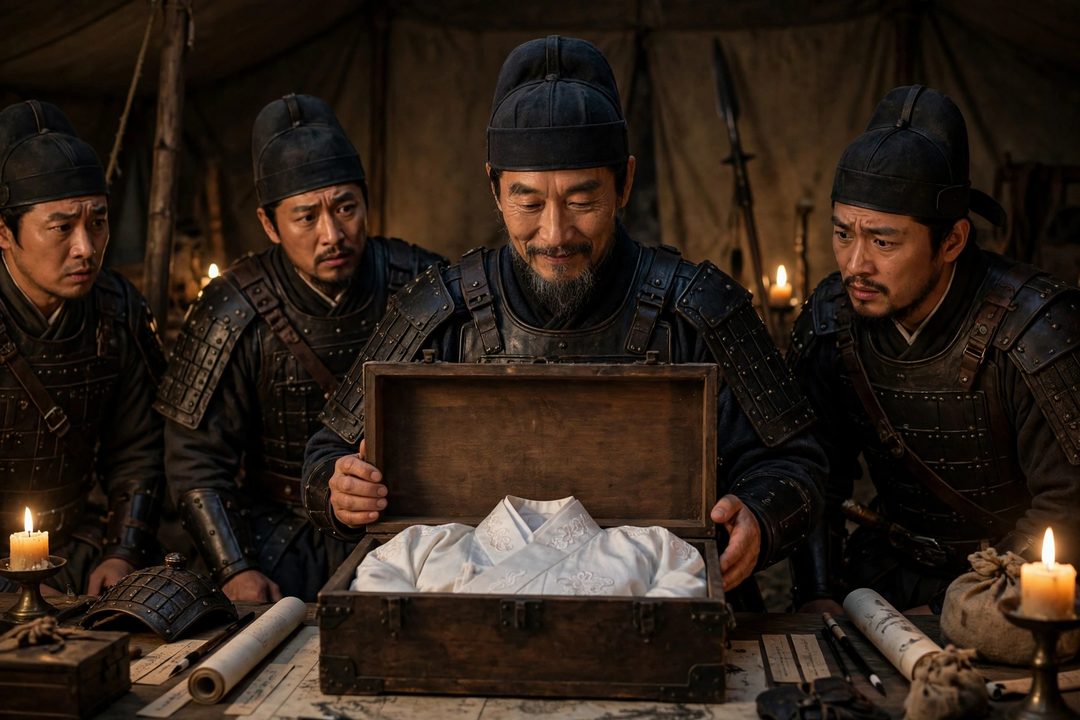
What Kongming prepared was a woman's headdress and a white woman's robe. He packed them in a large box, attached a letter, and sent a messenger to the Wei camp. The purport of the letter was this: though a commander-in-chief, you will not come out from behind your defenses to fight — how are you any different from a woman? If you will not come out, accept these clothes.
And if you still have any sense of shame, fix a day and fight. That was the demand. The purpose was not the clothes themselves. It was to anger him and drag him out of his camp. In fact, it was Kongming's side that was pressed for time. The longer an expeditionary army waits, the harder its food and its men's strength are strained.
Shame should have been the surest lever against a general. How would Sima Yi answer this move?
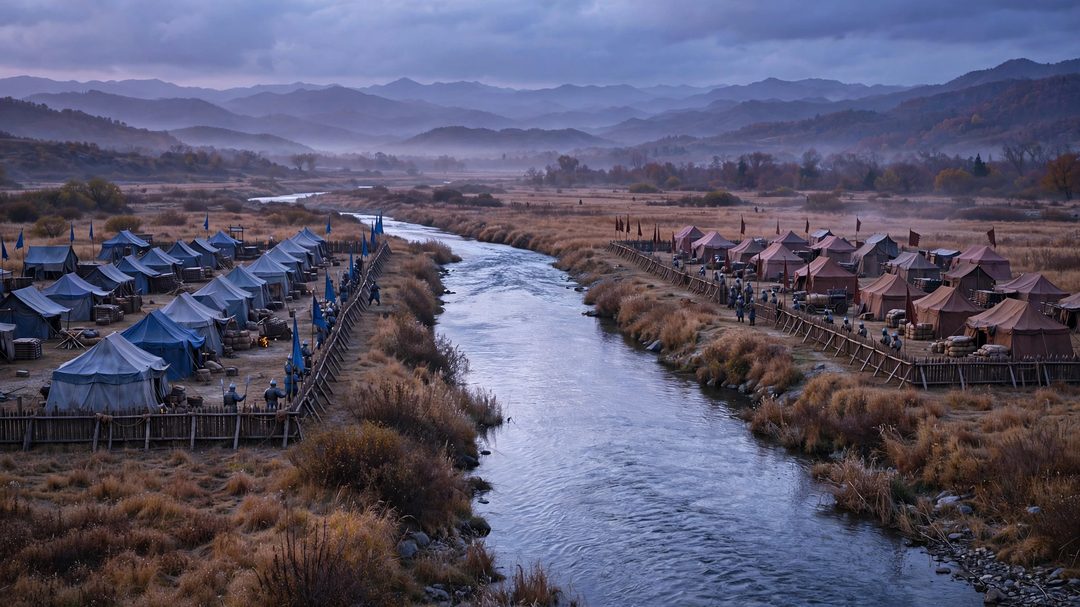
The Reply, Part One: Accepting with a Smile
The box was opened in front of the Wei generals. Inside were a woman's garments and the letter. Sima Yi read the letter. The Romance writes that in his heart he was angry. But he did not show it on his face. Feigning a laugh, he said: “Kongming seems to see me as a woman.”
With those words, he accepted the clothes. He further ordered that the messenger who had brought them be treated courteously. A provocation works only when the other side reacts. At the moment he showed no anger, this move had already missed.
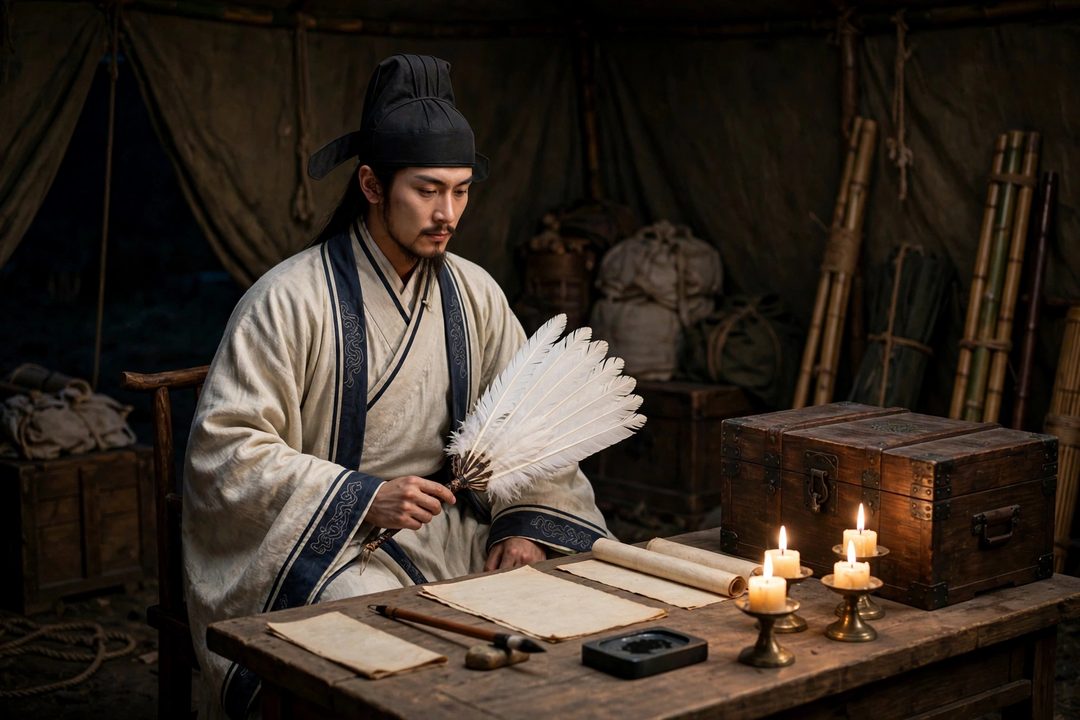
The Reply, Part Two: Asking Not about War, but about Daily Life
Sima Yi did not speak to the messenger about war at all. What he asked about was Kongming's daily life. “How are Kongming's meals and sleep? How closely does he attend to his work?” The messenger answered: the Chancellor rises early and works late, and personally reviews every punishment of twenty strokes or more.
His meals, he said, came to only a few sheng a day. Sima Yi turned to his generals and said: “He eats little and his work is burdensome. There is no way he can last long.” He had turned the scene of provocation into a place to probe the state of his opponent's body. Hearing the report, Kongming sighed.
“He knows me deeply.” Even his own officers remonstrated that he took on too much detailed work himself. That was how striking Kongming's way of working was.
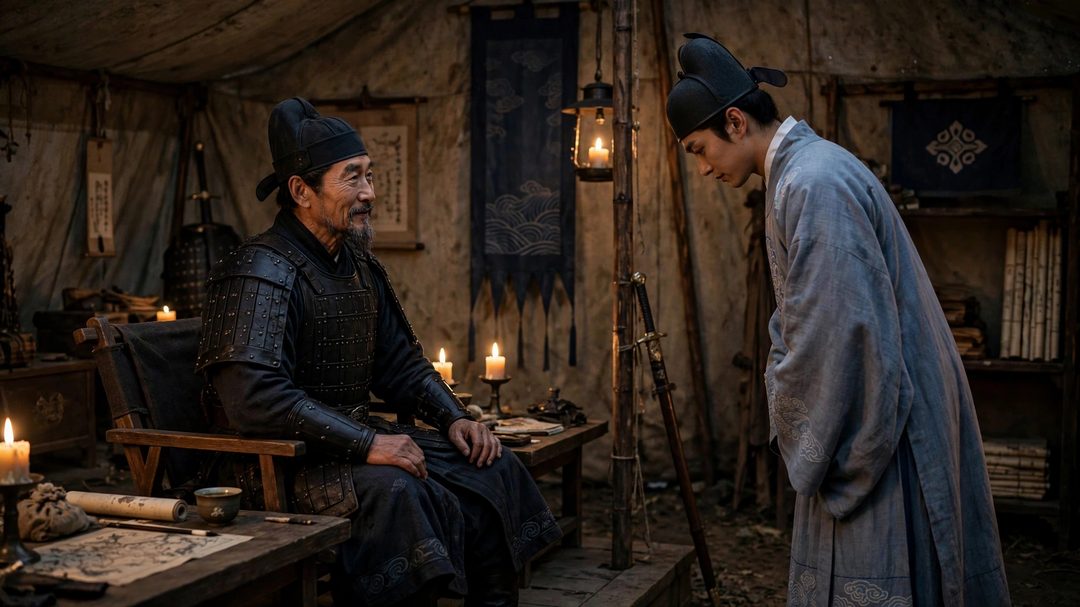
The Reply, Part Three: Turning Anger into a Petition
Meanwhile, the Wei generals would not stay silent. Learning of the insult, they all angrily demanded to be allowed to fight. Sima Yi answered: he had taken the insult to heart.
Sima YiBut I am commanded by the Son of Heaven to hold firm and not fight.
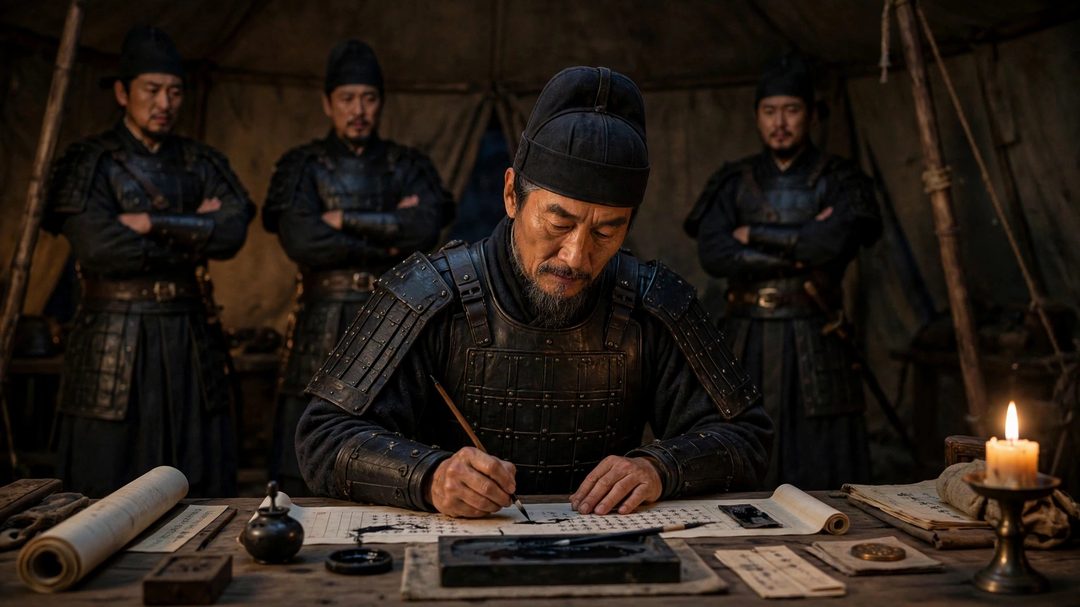
And he said: if you wish to go out, I will petition the Son of Heaven. Let us fight once permission is obtained. Sima Yi sent a petition to the emperor — a fervent text asking to be allowed to fight to the death to wipe away the shame. But the emperor's close aide saw through it. This was not a genuine petition.
It was a formality to calm the generals' anger, he judged. The emperor sent an envoy bearing his insignia of authority, ordering once again that there be no sortie. The generals could say nothing more. To that envoy, Sima Yi quietly said:
Sima YiYou know my heart well.
Hearing of this, Kongming too laughed and saw through it: this was a method to settle the army. The petition was not for fighting. It was for making, in the Son of Heaven's words, a reason not to fight.
A Reading: A Way of Fighting That Shows No Emotion
What the three replies share is that he showed no emotion. Show anger, and you hand the other side a look at your hand. Impatience, hopes, and failing strength can all be read from an expression. Sima Yi turned anger into laughter, insult into questions, and his own men's anger into procedure.
His weapon was not the sword. It was time. If he did not come out, the expeditionary army's side would crumble first. On that calculation, he kept waiting. And the outcome of that waiting would in time lead, at Wuzhang Plains, to Kongming's end.
Conclusion: His Weapon Was Time
The Romance depicted the exchange of the women's clothes in this way. The sender tried to move his opponent with shame. The receiver did not show his anger, read how much life his opponent had left, and received his own men's anger with the Son of Heaven's command. What divided victory from defeat was not only the exchange of techniques. It was whether emotion was shown or not shown.
It was not that he felt no anger. It was that, feeling it, he did not show it on his face. That was Sima Yi's strength. Sent women's clothes, Sima Yi did not grow angry. It was a way of fighting that showed no emotion.
Sources and Basis
The Source Story
Based solely on the text of Chapter 103 of Romance of the Three Kingdoms (the text collected on Wikisource). No comparison with or examination against the historical record has been made; this article is made as a reading of the Romance's scene.
Distinguishing the Romance from the Records
In the text, Sima Yi is written as being “greatly angered in his heart,” while “feigning a laugh” (a forced smile) as he accepts the clothes. This article likewise keeps to the expression that “he did not show his anger on his face,” conveying the text's distinction as it stands.