The Life of Guan Yu — The Rise and Fall of the Man Who Kept Faith to the End
From Romance of the Three Kingdoms and the Biography of Guan Yu in Records of the Three Kingdoms
The starting point of the man who became a god was a fugitive driven from his hometown. Guan Yu — courtesy name Yunchang — is one of the most famous generals of the Three Kingdoms.
Read the Comic
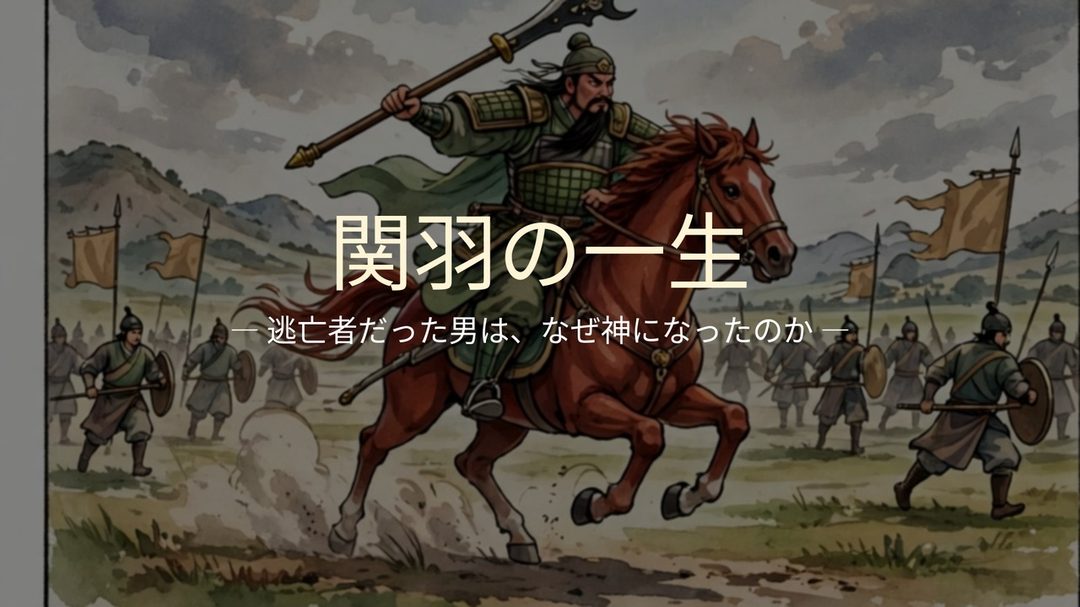
The Life of Guan Yu
The Man Who Had Been a Fugitive
The Peach Garden Oath
Cao Cao's Generous Treatment
Yan Liang at Baima
Hanging the Seal, Sealing the Gold, and the Ride of a Thousand Li
Righteousness at the Huarong Road
Huang Zhong at Changsha
The Single-Sword Meeting
The Battle of Fancheng
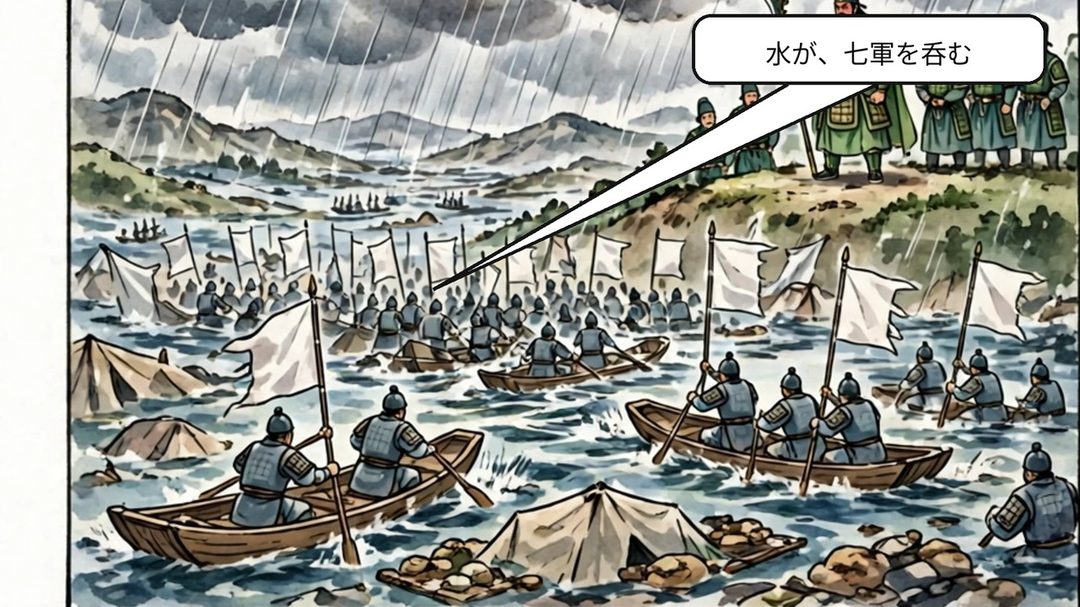
Drowning the Seven Armies
Scraping the Bone
Lu Xun's Letter
Crossing the River in White Clothes
Maicheng
His End at Linju
The Records and the Romance
Toward an Enshrined Being
The Titles of Song
Guansheng Dijun, the Saintly Emperor Guan
A God Who Lives On Today
Conclusion
Read the Text
The Life of Guan Yu
The starting point of the man who became a god was a fugitive driven from his hometown. Guan Yu — courtesy name Yunchang — is one of the most famous generals of the Three Kingdoms. But the beginning of this man, as the historical record relates it, was an exile who had fled his hometown. That man became a famed general who shook Huaxia, and, more than a thousand years after his death, came to be enshrined as a god.
Today: from fugitive to god. We follow Guan Yu's life, separating the Romance from the historical record.
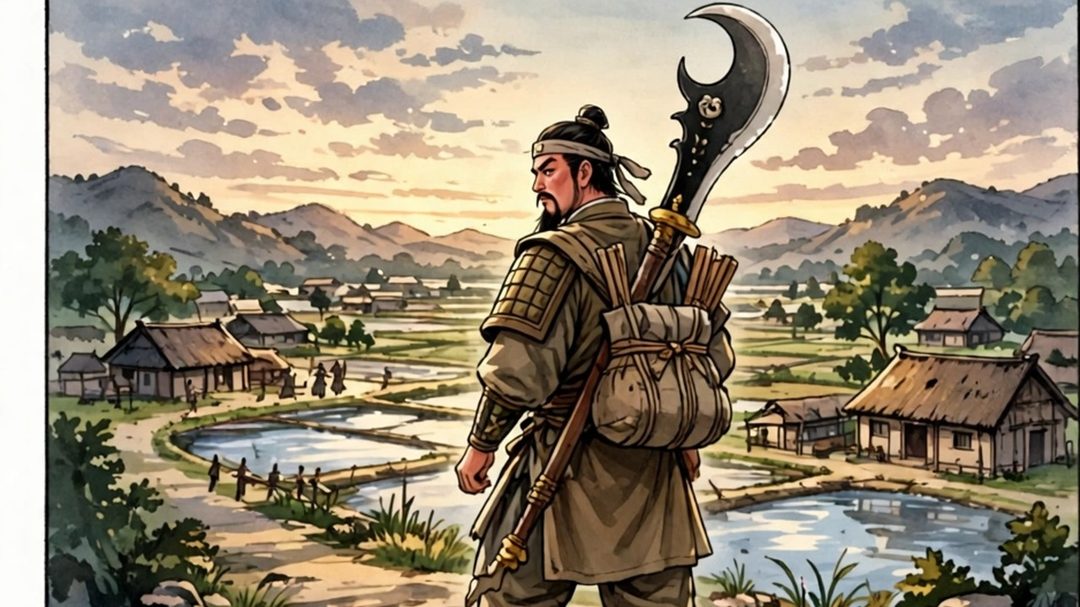
The Man Who Had Been a Fugitive
Guan Yu's hometown was Xie County in Hedong Commandery, around the south of present-day Shanxi Province. The Biography of Guan Yu in the historical record writes only this at its opening: Guan Yu, courtesy name Yunchang, originally Changsheng; a man of Xie in Hedong, who fled into exile to Zhuo Commandery. Why did he have to flee? The historical record does not write a single word of the reason.
It is the Romance that tells the reason: in his hometown there was a local magnate who abused his power to torment people, and Guan Yu killed him. For five or six years, he had been fleeing through the rivers and lakes, it says. In other words, the circumstances of a god's starting point did not remain in the books of history, but were told on the novel's side. Nor is there any certain record of the year he was born.
Guan Yu's youth begins from a blank in the record. In Zhuo Commandery, where that man of the blank arrived, a fateful meeting awaited him.
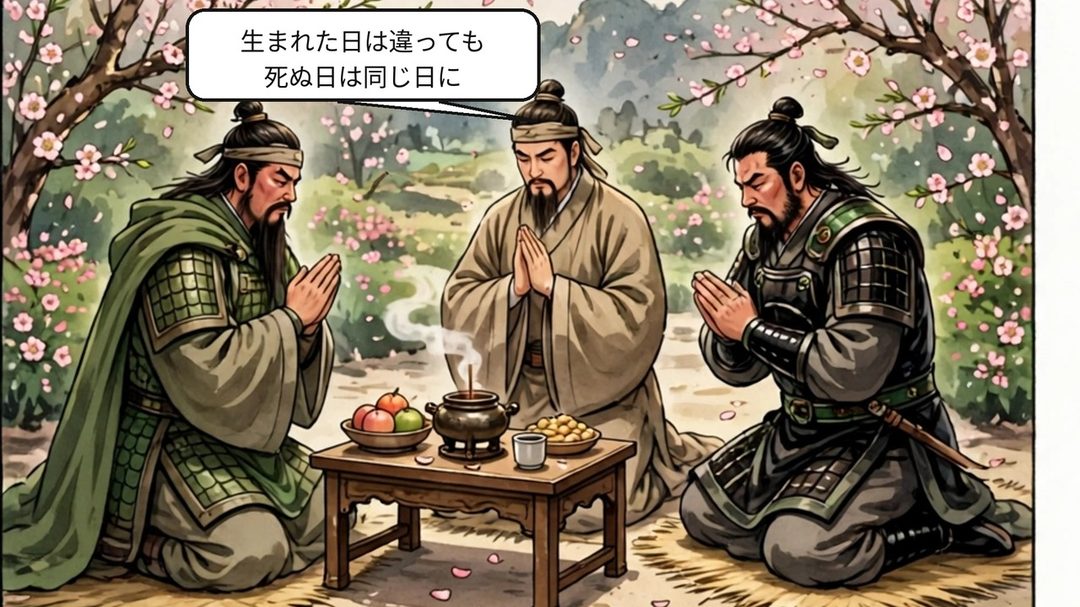
The Peach Garden Oath
In Zhuo Commandery, Liu Bei was gathering the young men of his home district in preparation for the Yellow Turban Rebellion. Guan Yu, together with Zhang Fei, entered his service, and served so closely that they shared food and lodging — so the historical record relates. The Romance fashioned this meeting into its famous scene: the oath of brotherhood in the peach garden.
We were not born in the same year, the same month, the same day. But when we die, let it be in the same year, the same month, the same day. These are the words known as the Peach Garden Oath. This oath decided everything about Guan Yu from then on: never to leave the man he had taken as his elder brother. That became Guan Yu's way of life.
In fact, when Liu Bei became Chancellor of Pingyuan, Guan Yu and Zhang Fei were appointed Majors of Separate Commands, each holding a division of the army.
Cao Cao's Generous Treatment
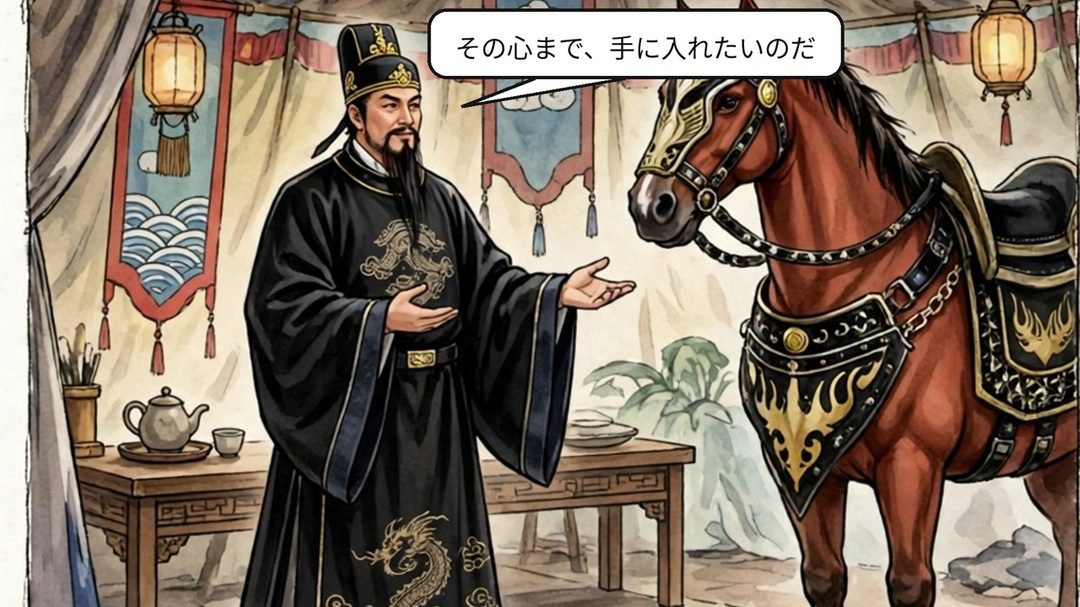
In time the world fell into disorder, and Liu Bei came to fight Cao Cao as a separate force. In the 5th year of Jian'an, the year 200, Liu Bei was defeated, and Guan Yu was captured by Cao Cao. But Cao Cao neither bound Guan Yu nor treated him coldly. Every three days a small banquet, every five days a great banquet, and at the end he even presented him with the famed horse Red Hare — so the Romance writes.
What Cao Cao valued was Guan Yu's arm, and Guan Yu's heart. But that heart could not be bought. Guan Yu's words were fixed: as soon as General Liu's whereabouts are known, I will return to him at once.
Yan Liang at Baima
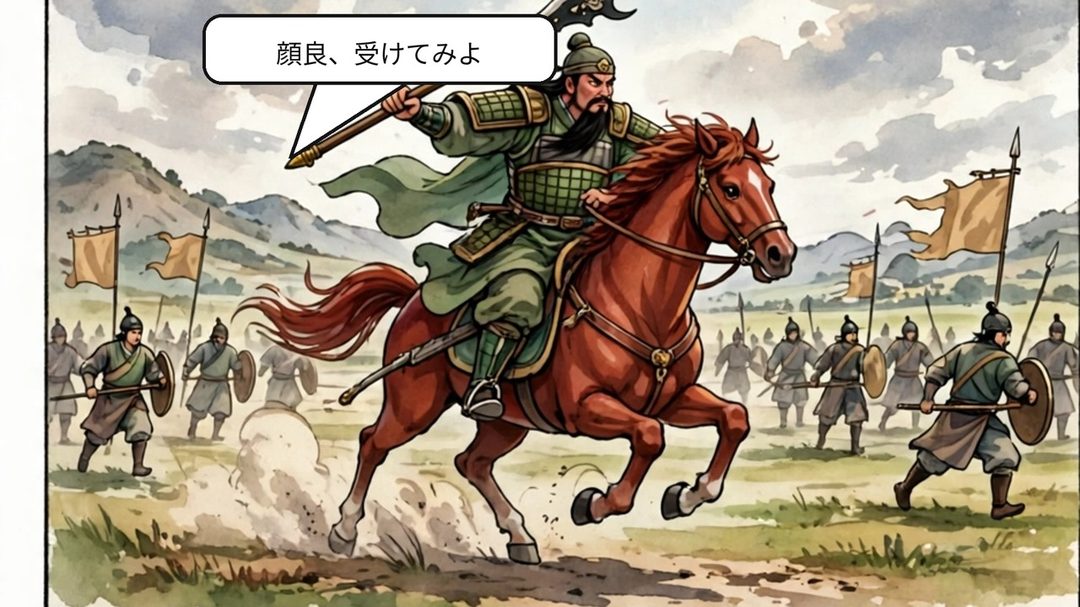
A debt of kindness is repaid with kindness. That was Guan Yu's way. When Yan Liang, Yuan Shao's famed general, attacked Baima, Cao Cao placed Guan Yu in the vanguard. Spotting Yan Liang's canopy in the distance, Guan Yu whipped the Red Hare horse and charged into the midst of the myriad army. Before Yan Liang could even ask a question, Guan Yu's single blow decided it.
To Guan Yu, who took the head and returned, no enemy general could catch up — so the Romance writes. This slaying of Yan Liang is an achievement that also remains in the Biography of Guan Yu in the historical record. A record of striking down an enemy general amid a myriad host remains, in the Three Kingdoms, for Guan Yu alone. The debt was repaid. Within Guan Yu, the preparations to leave Cao Cao's side were complete.
Hanging the Seal, Sealing the Gold, and the Ride of a Thousand Li
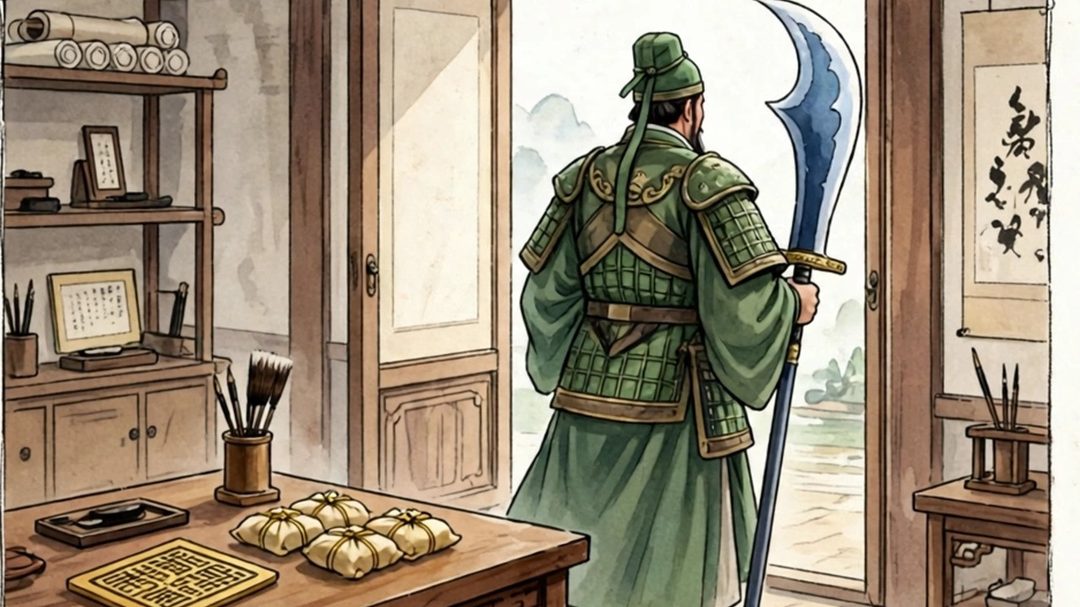
Guan Yu left behind all the gold, silver, and seals he had received from Cao Cao. “Hanging the Seal and Sealing the Gold”: the seal is hung up and left, the gold left untouched with its seal unbroken. Leaving only a written note, Guan Yu headed for Liu Bei's side. The cleanliness of this parting gift became one of the foundations of Guan Yu's image in later ages.
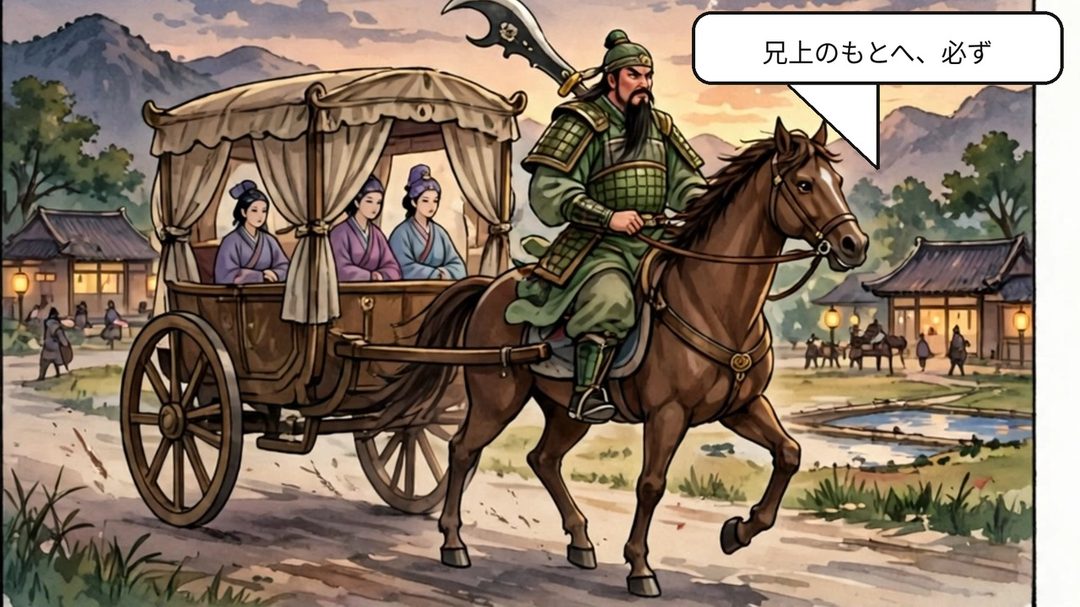
On the way, he crossed five passes and slew six defending generals — that is the Romance's Five Passes and Six Generals. His figure, guarding his lord's wife's carriage and galloping a thousand li alone, is handed down under the name of Riding Alone for a Thousand Li. The details of these Five Passes and Six Generals are embellishments of the Romance; the historical record writes only that Guan Yu left Cao Cao's side.
Cao Cao stopped the pursuers: do not pursue those who leave — each serves his own lord, he said. Thus Guan Yu returned to Liu Bei's side. Captured, and treated generously, his oath did not bend by a hair.
Righteousness at the Huarong Road
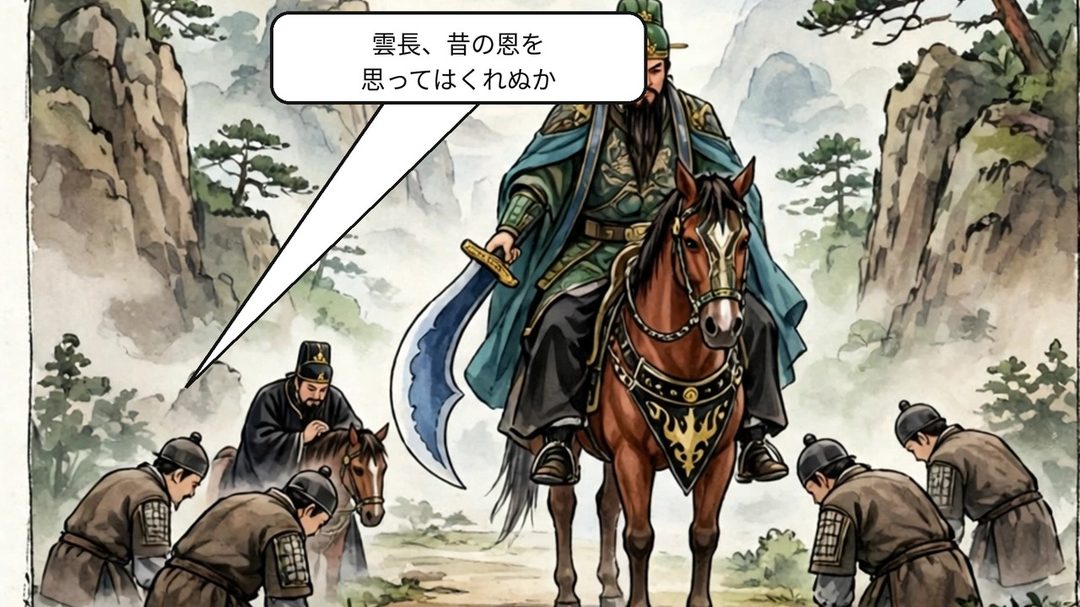
Guan Yu's righteousness could also be directed at an enemy. After the Battle of Red Cliffs, the defeated Cao Cao fled by the Huarong Road. Waiting in ambush was Guan Yu. Cao Cao said:
Cao CaoRemembering the kindness of former days, will you not let me pass?
Guan Yu wavered between the kindness he had received and his present duty. And he opened the road. The Romance depicted this scene as one in which Guan Yu's righteousness stood on a par even with the duty between lord and retainer. A man who keeps faith even with an enemy — that was Guan Yu.
Huang Zhong at Changsha
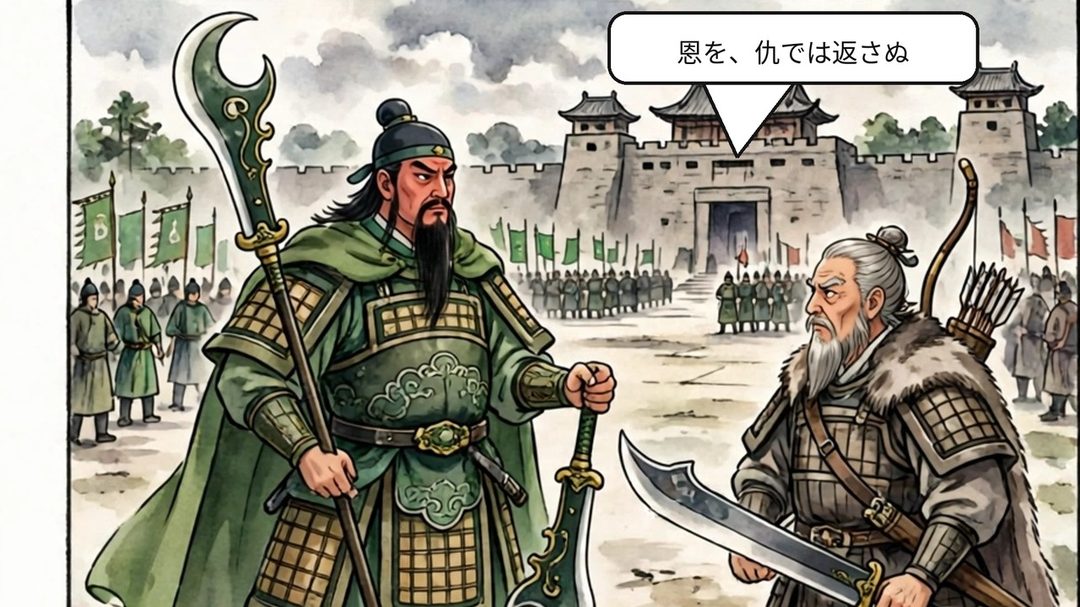
It was when, after Liu Bei took Jing Province, Guan Yu went to take Changsha. Defending the town was the veteran general Huang Zhong, a master of the bow, said never to miss in a hundred shots. The two crossed evenly. When Huang Zhong's horse stumbled and fell, Guan Yu did not strike him down: go back today.
Change your horse, and let us fight again tomorrow. So saying, Guan Yu withdrew. The next day, Huang Zhong, feeling the kindness, is said to have aimed his arrow at the cord of Guan Yu's helmet. He did not take his life. To acknowledge a strong opponent as strong — this spirit pushed Guan Yu's reputation higher still.
The Single-Sword Meeting
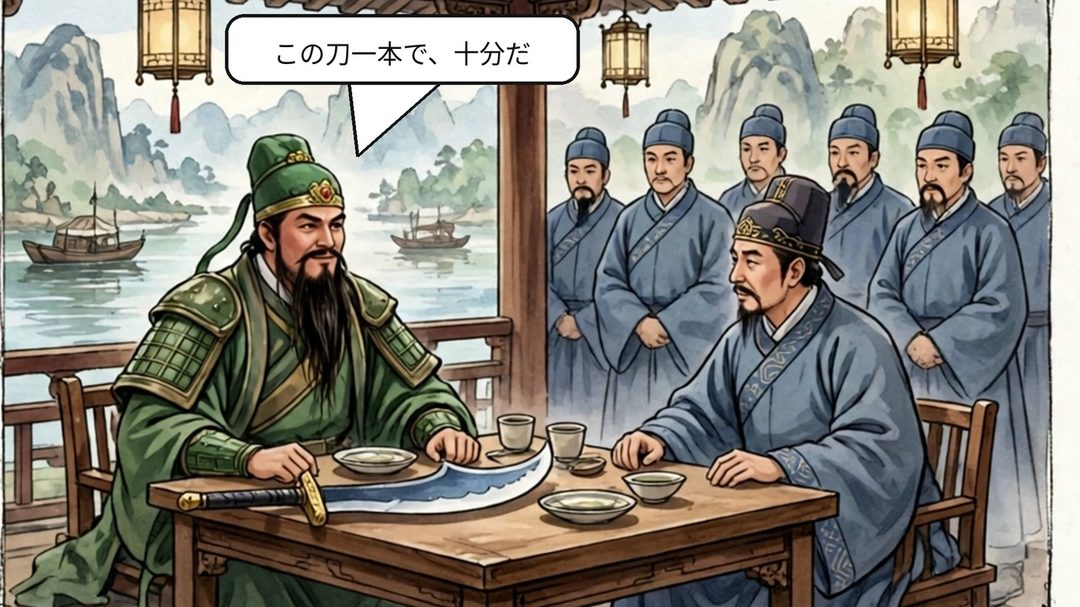
Guan Yu's name came in time to resound even in Wu, south of the Yangtze. It is the scene of the Single-Sword Meeting, in which Lu Su invited Guan Yu to a drinking party. Guan Yu rode into Wu's camp with a single sword and only a few attendants. At the party, even when Lu Su demanded the return of Jing Province, Guan Yu did not yield a single step. Even in a seat with few escape routes, he was unmoved.
That greatness of nerve was this man's reputation.
The Battle of Fancheng
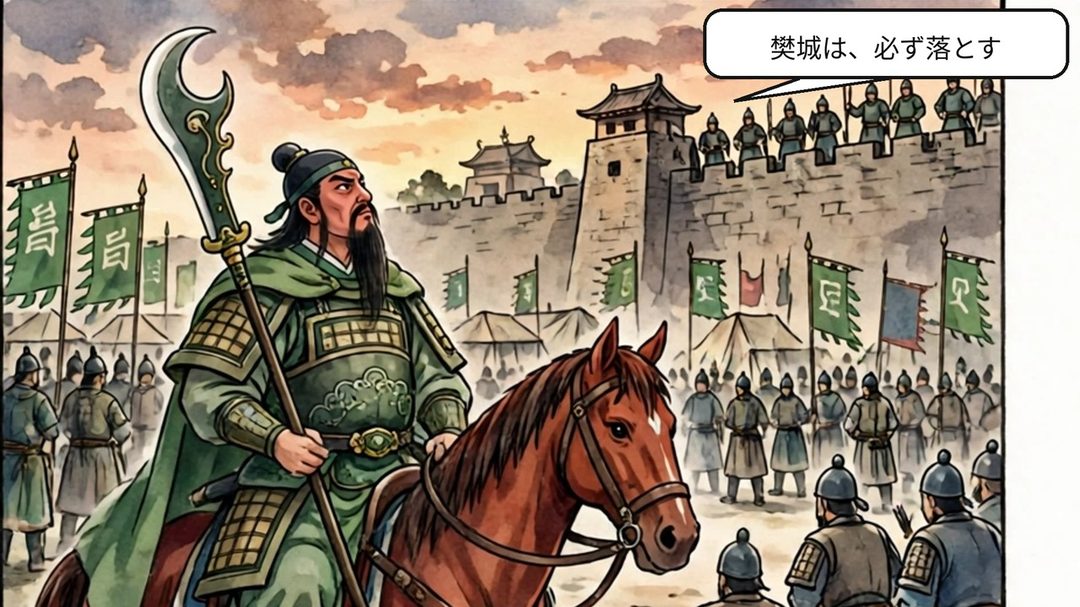
In the 24th year of Jian'an, 219, Guan Yu attacked Fancheng northward from Jing Province. This northern expedition was not Guan Yu's arbitrary decision. By Kongming's design in Chengdu, Guan Yu was ordered to attack Fancheng. Wei's relief force brought Yu Jin's Seven Armies. The vanguard, Pang De, showed his resolve to fight to the death by carrying a coffin.
Guan Yu's army took Xiangyang and surrounded Fancheng. It was the beginning of his zenith. But in the midst of this siege, Guan Yu took a poisoned crossbow bolt in the arm and fell from his horse.
Drowning the Seven Armies
In the eighth month, the autumn rains continued. Guan Yu dammed the water's outlets and waited for the moment. Yu Jin's Seven Armies were massed in a low valley. The water was released, and the flat land sank to a depth of more than a zhang. The Seven Armies were almost annihilated. Yu Jin surrendered, and Pang De, who refused to surrender, was beheaded. Guan Yu's name shook all of Huaxia.
His momentum was such that Cao Cao considered moving the capital. In the historical record, however, this water is not written as water Guan Yu released. It is recorded as a natural flood, in which the Han River overflowed in the autumn rains. Even so, the result was the same: the Seven Armies sank, and Guan Yu stood at his zenith.
However, Fancheng alone did not fall. By the reading of its defenders, Cao Ren and Man Chong, the town was holding out.
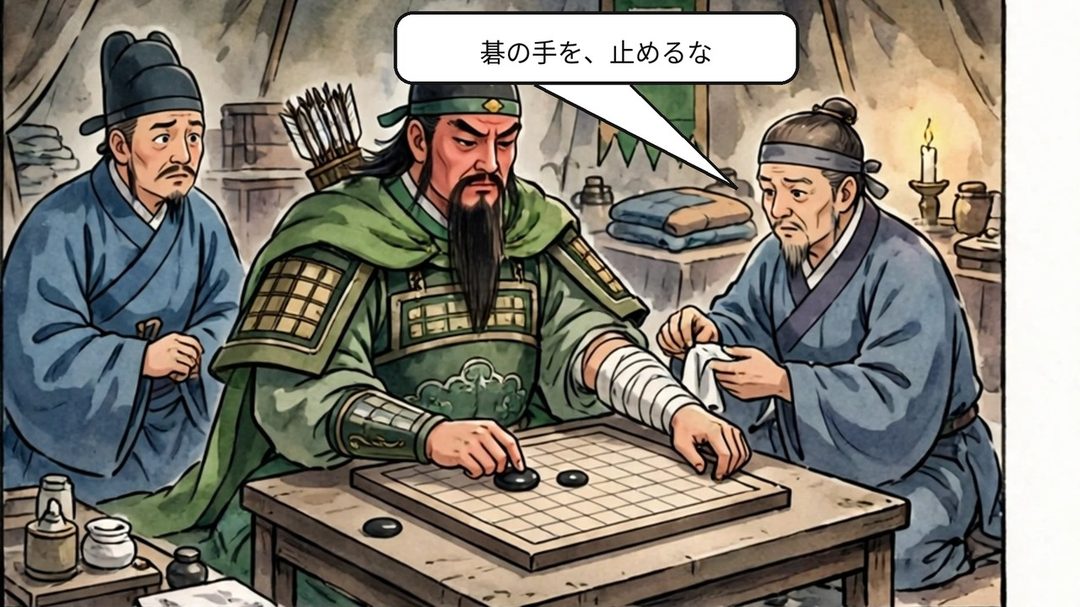
Scraping the Bone
At his zenith, a wound remained in Guan Yu's body. The physician said the poison that had soaked into the bone had to be scraped away or it would not heal. Guan Yu endured the treatment to the end while playing Go. He did not change color in the least — so the Romance writes. A great undertaking must not be ruined by a small wound. Even when advised to withdraw for treatment, Guan Yu would not withdraw.
In the historical record, the physician who scraped the bone has no name — Hua Tuo's name does not appear — and the place of the wound is given as the left arm. The details of the famous scene are the Romance's fleshing out.
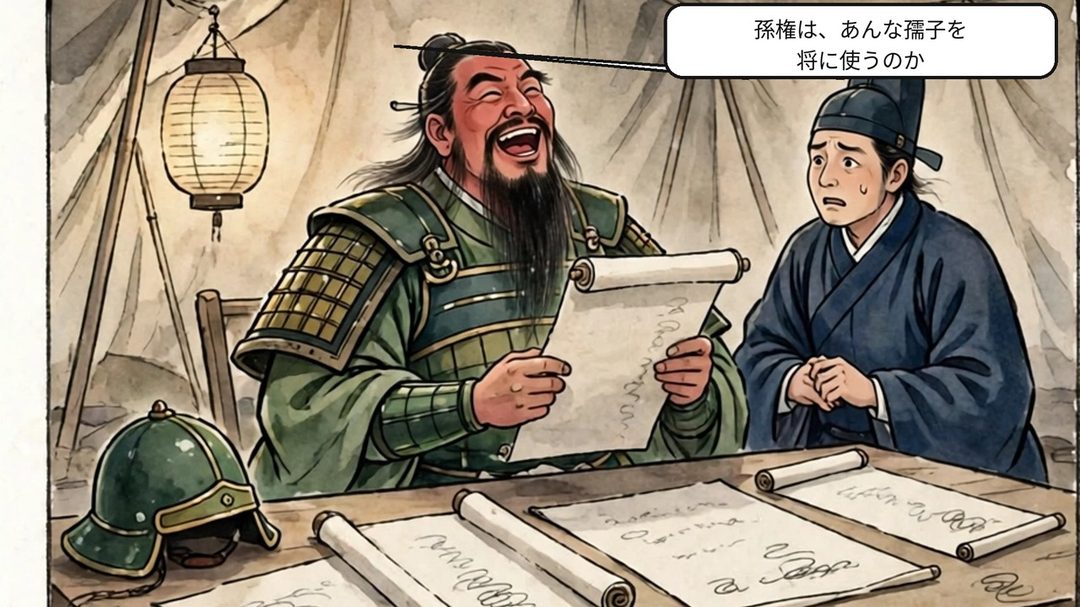
Lu Xun's Letter
While Guan Yu was stalled in the north, a different contrivance was moving in the south. Lü Meng of Wu withdrew, pleading illness, and the young Lu Xun stood as his successor. The letter Lu Xun sent to Guan Yu was of an extremely humble wording: I am a young novice, no match for Guan Yu's fame, it said. Reading the letter, Guan Yu laughed loudly.
Sun Quan has shallow insight, to use such a child as a general, he said. And Guan Yu drew off the greater part of Jing Province's troops to the front at Fancheng. That single point — the defense behind him grown thin — became the parting of his fate. This device of the letter also has a record in the historical record. It is no invention of the Romance.
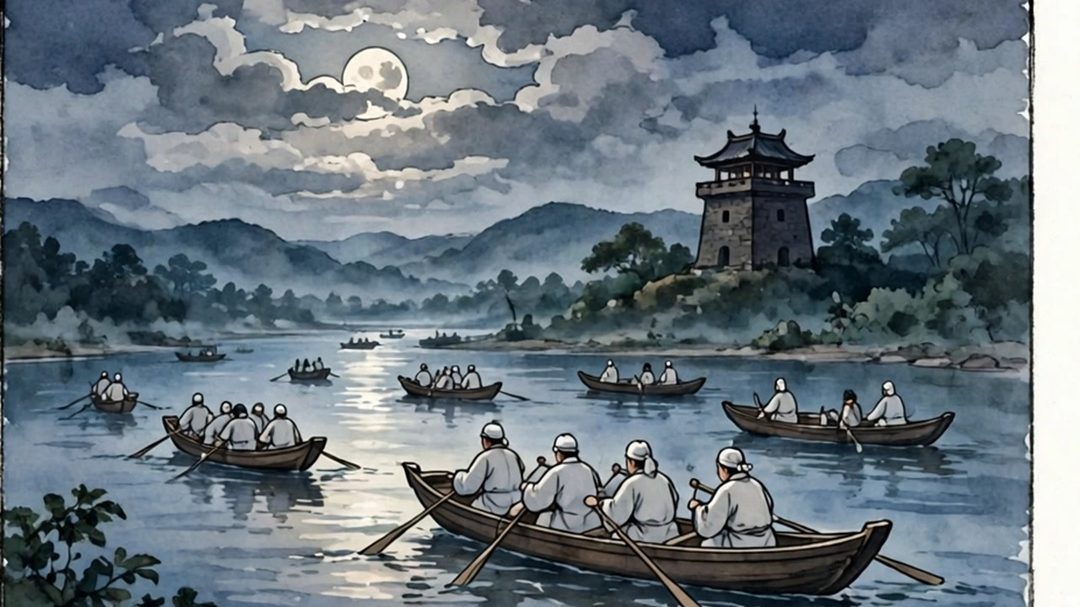
Crossing the River in White Clothes
Word that Jing Province's troops had grown thin reached Sun Quan by a night ride. Lü Meng dressed men used to the water as merchants in white clothes and had them row the oars. Picked troops lay hidden in the ships' holds. The beacon towers on the riverbank, lulled by the goods the merchants brought in, raised no alarm. At night, the picked troops came out of the holds and captured the towers' soldiers.
Because not one man was allowed to escape, neither fire nor smoke rose. Jing Province's town fell almost without bloodshed. Guan Yu's rear had been taken without a sound. Lü Meng enforced strict military discipline and protected Guan Yu's family. This care would later loosen even the hearts of the soldiers at the front. It was in the midst of his fight with Xu Huang that this report reached Guan Yu in the north.
Maicheng
Having lost Jing Province, Guan Yu withdrew to Maicheng. The troops remaining were a few hundred. There were no provisions in the town either. Mi Fang in Nan Commandery and Fu Shiren in Gong'an had surrendered to Wu without fighting. The words Guan Yu had left behind after the fire on the night before the expedition also played a part in pushing the two men's decision. Messengers to Chengdu and requests for relief to nearby Shangyong were sent out, but no relief force came.
The soldiers, learning from the messenger Lü Meng had courteously sent back that their families were safe, left the town one after another. Guan Yu's army did not dwindle by fighting. Their homeward destination had been taken first, and their feet turned toward home. To the urging of surrender, Guan Yu answered:
Guan YuJade may shatter, but it cannot change its whiteness.
In the snowy town, Guan Yu resolved on a final escape.
His End at Linju
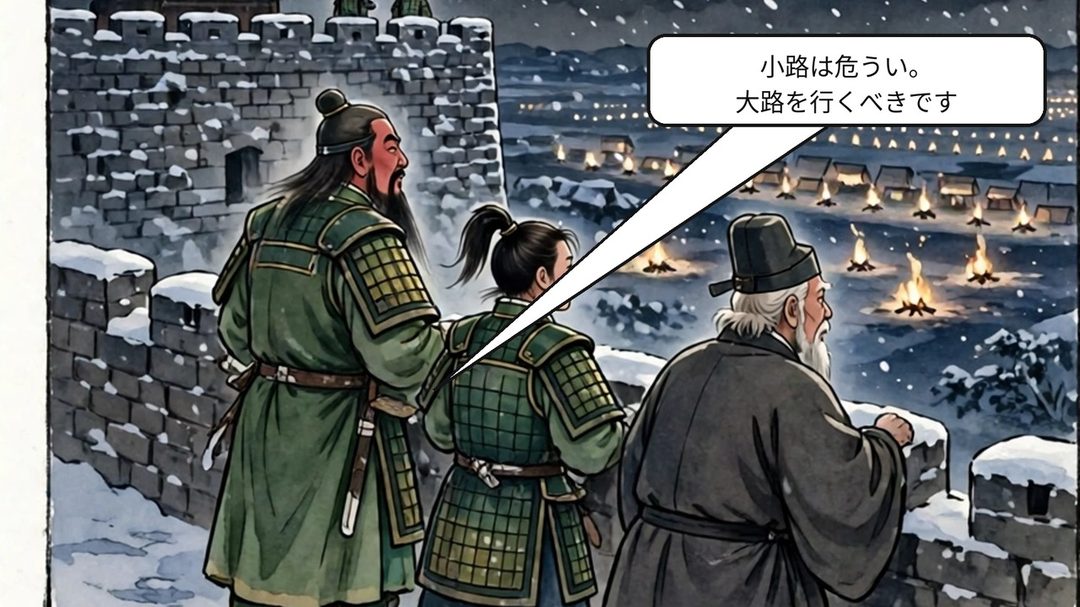
That night, Guan Yu left by the north gate together with Guan Ping. Lü Meng had placed an ambush on the small path that was the escape route. Wang Fu's final counsel had been that there would be an ambush on the small path, and they should take the main road. Guan Yu did not accept it. At a place called Jueshi, the ambush's hooks and ropes tangled the legs of the Red Hare horse.
Guan Yu fell from his horse and was captured. Before Sun Quan, Guan Yu refused to surrender. In the 24th year of Jian'an, in the twelfth month of winter, Guan Yu died together with Guan Ping. The Romance gives Guan Yu's age at death as fifty-eight. The turbulent life of the man who had been a fugitive ended. But Guan Yu's story did not end there.
Rather, this was its true beginning.
The Records and the Romance
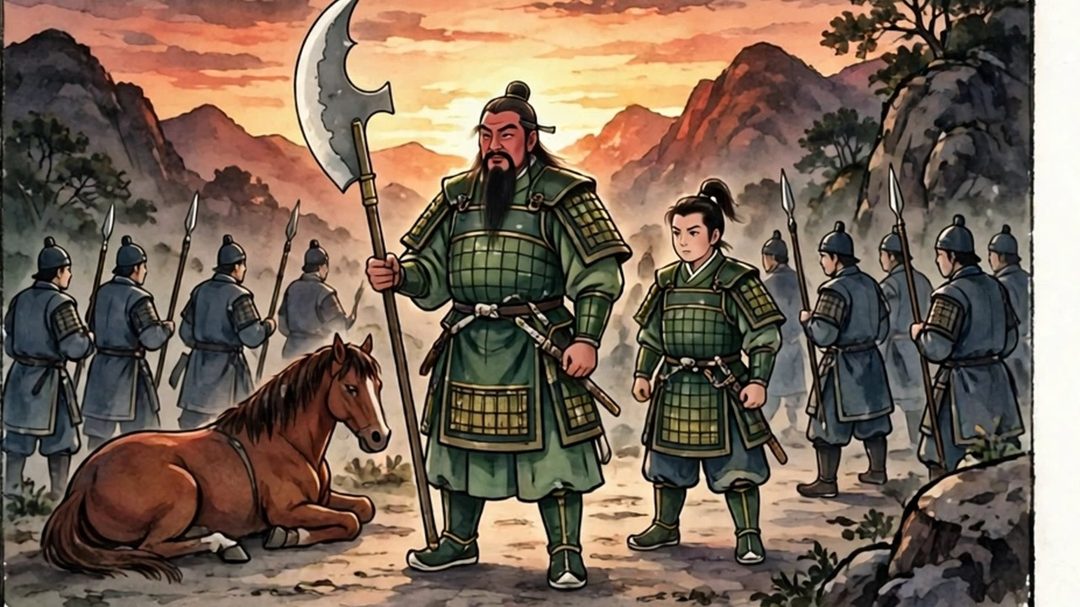
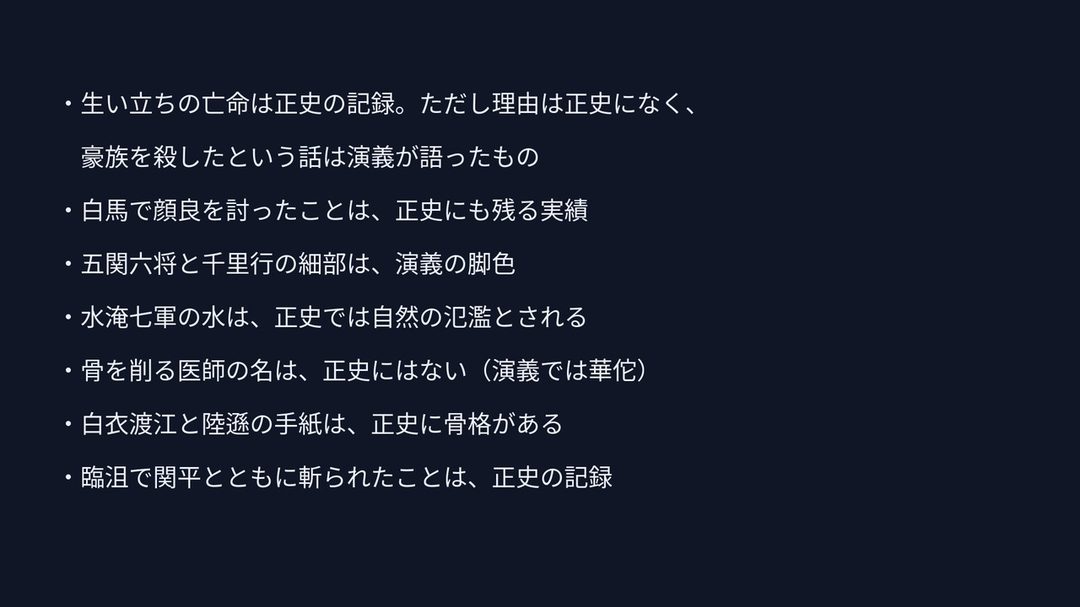
Here, let us draw the line between the historical record and the Romance. His flight in his youth is a record of the historical record, but its reason is not in the historical record. The reason — that he killed a local magnate — is what the Romance told. His slaying of Yan Liang at Baima is an achievement that also remains in the historical record. Conversely, the details of the Five Passes and Six Generals and the Ride of a Thousand Li are embellishments of the Romance.
The water that drowned the Seven Armies was, in the historical record, a natural flood. The name of the physician in the bone-scraping scene is also not in the historical record. Both the Crossing of the River in White Clothes and Lu Xun's humble letter have skeletons in the historical record. That Guan Yu was beheaded at Linju together with Guan Ping is a record of the historical record. The Romance fleshed out scenes and lines upon the skeleton of historical fact, and made the figure of Guan Yu visible.
Toward an Enshrined Being
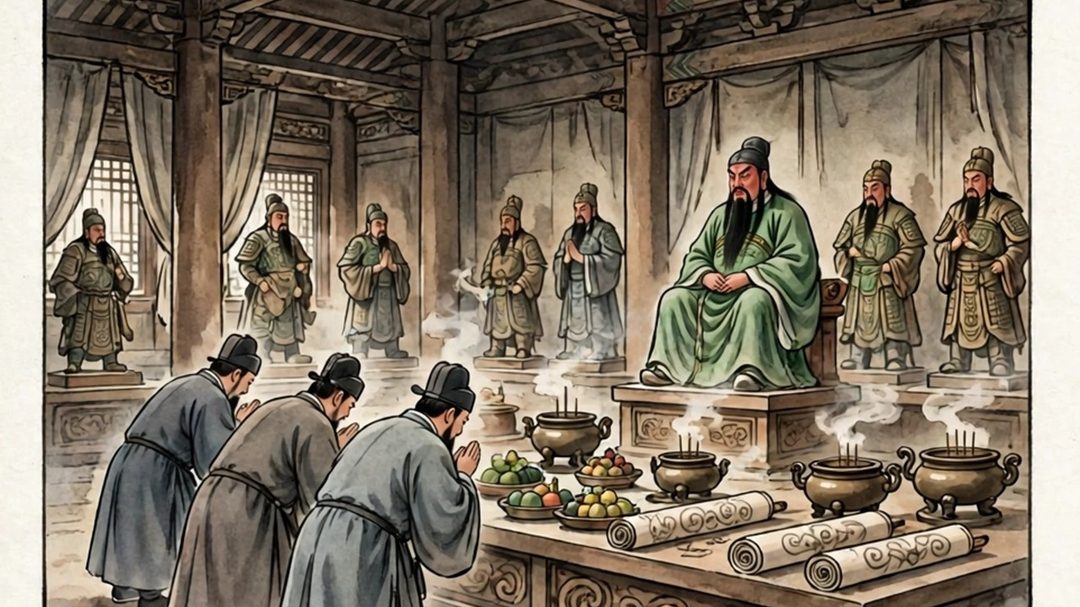
Soon after his death, the Shu court presented Guan Yu with the posthumous name Zhuangmiao Hou (Marquis Zhuangmiao). This was the starting point of Guan Yu's evaluation. He was not yet a god — no more than a state's courtesy toward a general who had been defeated and died. But over several hundred years, Guan Yu came to be a being enshrined in temples.
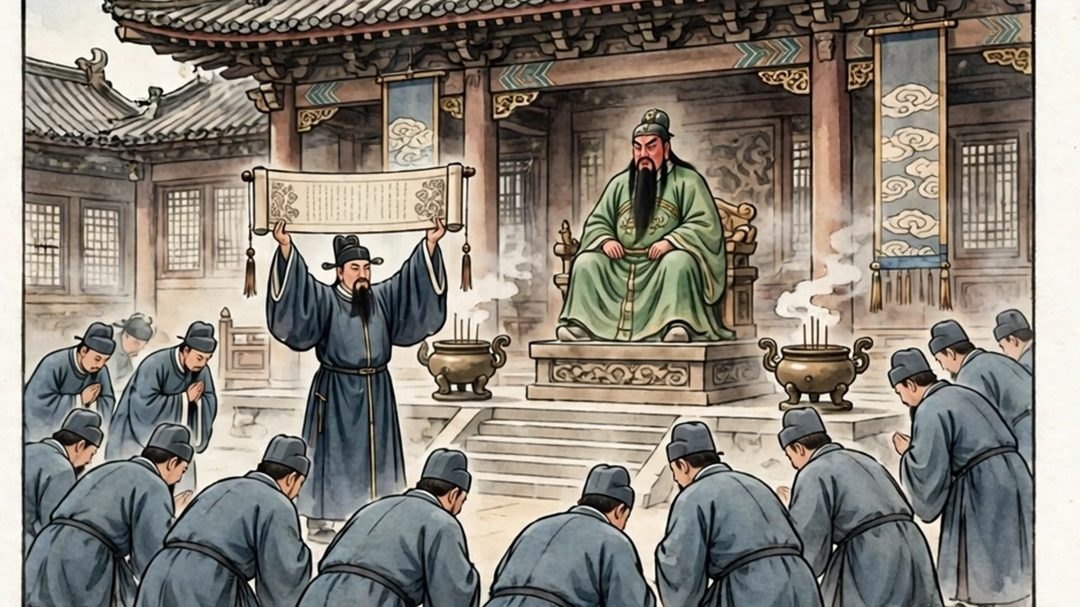
In the Tang era, in the Martial Temple that enshrined the famed generals of old, Guan Yu too was added as one of the famed generals. In his hometown of Xie County, and on Yuquan Mountain in Linju, shrines enshrining Guan Yu came to be built. From general to an enshrined being — Guan Yu's promotion after death had begun.
The Titles of Song
In the Song era, the dynasty came to present Guan Yu with title after title. In the reign of Huizong, first Zhonghui Gong — the rank of Duke. In time he rose to Zhaolie Wu'an Wang and Yiyong Wu'an Wang — as far as the rank of King, or Prince. Each time his title rose, Guan Yu's standing as a god rose as well. In an age when wars never ceased, the state needed a model of loyalty and righteousness.
Guan Yu, who never bent his oath to his lord to the very end, was perfectly suited to be that model. Guan Yu's temples spread across the land of Song.
Guansheng Dijun, the Saintly Emperor Guan
In the 42nd year of Wanli of the Ming, 1614, Guan Yu finally received the title of Emperor: Sanjie Fumo Dadi Shenwei Yuanzhen Tianzun Guansheng Dijun. The name Guansheng Dijun — the Saintly Emperor Guan — begins in earnest from here. A military general called by a title of imperial rank: as a human being, there is no further promotion than this.
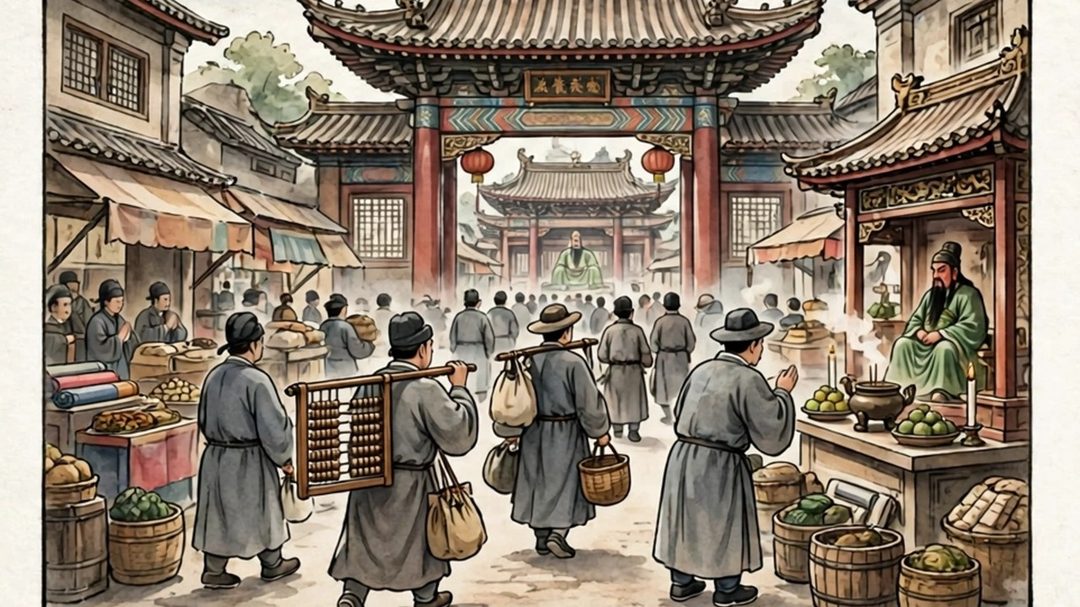
In the succeeding Qing era, the title Zhongyi Shenwu Guansheng Dadi was presented, and characters continued to be added after that as well. In Qing, it is related, Guan Di temples were built across the land as martial temples, standing alongside Confucius's civil temples. And Guan Yu came to be enshrined as a god of commerce as well. The man who kept his oaths became, in the world of commerce where trust is life, the god who keeps promises.
In canal towns and lands where merchants came and went, Guan Di temples came to be built.
A God Who Lives On Today
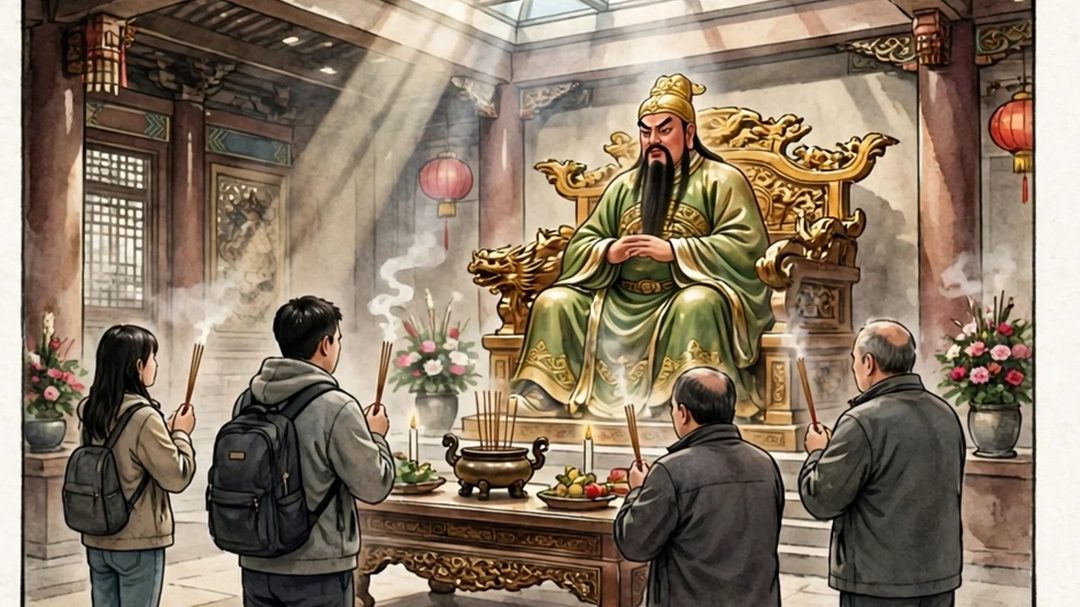
Faith in Guan Yu spread beyond China as well. In land after land where overseas Chinese settled, Guan Di temples were built, and the smoke of incense never ceases even now. In Japan's Chinatowns, too, there are Guan Di temples. In Yokohama and Kobe, Guan Yu is still enshrined. Enshrined as a military general, enshrined as a god of commerce, enshrined as a god of honesty and trust.
A name that has lived on for nearly 1,800 years — in the Three Kingdoms, there is none other than Guan Yu.
Conclusion
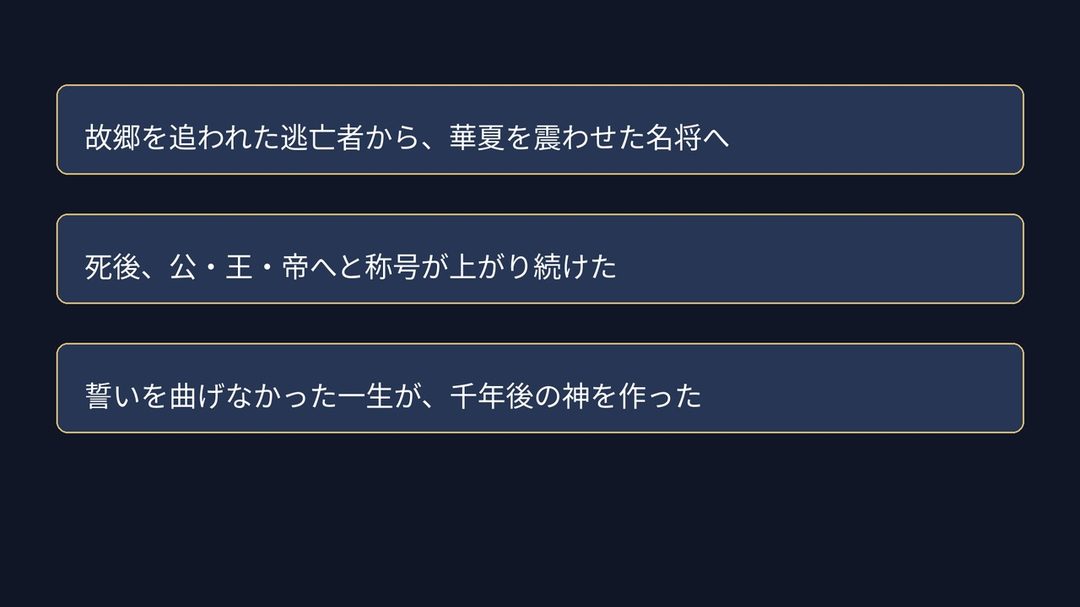
Let us lay it out: a fugitive driven from his hometown; a sworn brother of the Peach Garden; the general who spurned Cao Cao's generous treatment, galloped a thousand li, stood at a zenith that shook Huaxia, and fell at Maicheng. And the god who, after death, became a Duke, became a King, and finally came to be called an Emperor. Guan Yu's true greatness lies in the thousand years after he died.
A person dies, but his evaluation lives on. The greatest example of that was this man. Why did the man who had been a fugitive become a god? The answer lies in a life that never bent its oath, and in the side of the ages that kept needing that life.
Sources and Basis
The Source Story
Based on the chapters concerning Guan Yu in Romance of the Three Kingdoms and on the Biography of Guan Yu in Records of the Three Kingdoms (Chen Shou's history). For the latter half (Chapters 73 to 77), the collation made at the time of production, which dealt with Guan Yu's death, was reused for verification.
Distinguishing the Romance from the Records
There is no certain evidence for Guan Yu's birth year. The tradition that he died at the age of fifty-eight comes from the Romance side, and this article treats it as “one account.” It is made explicit that the story of his youth — that he killed a local magnate and fled — is the telling of Chapter 1 of the Romance.